


Dental health guides
Clear answers to common dental questions, with the research behind them.
Browse every dental guide

Our new website, built in one day by JitterSystem
If you've visited our website lately, you'll have noticed it looks different. We've rebuilt it from top to bottom so that booking a visit,…
Read the story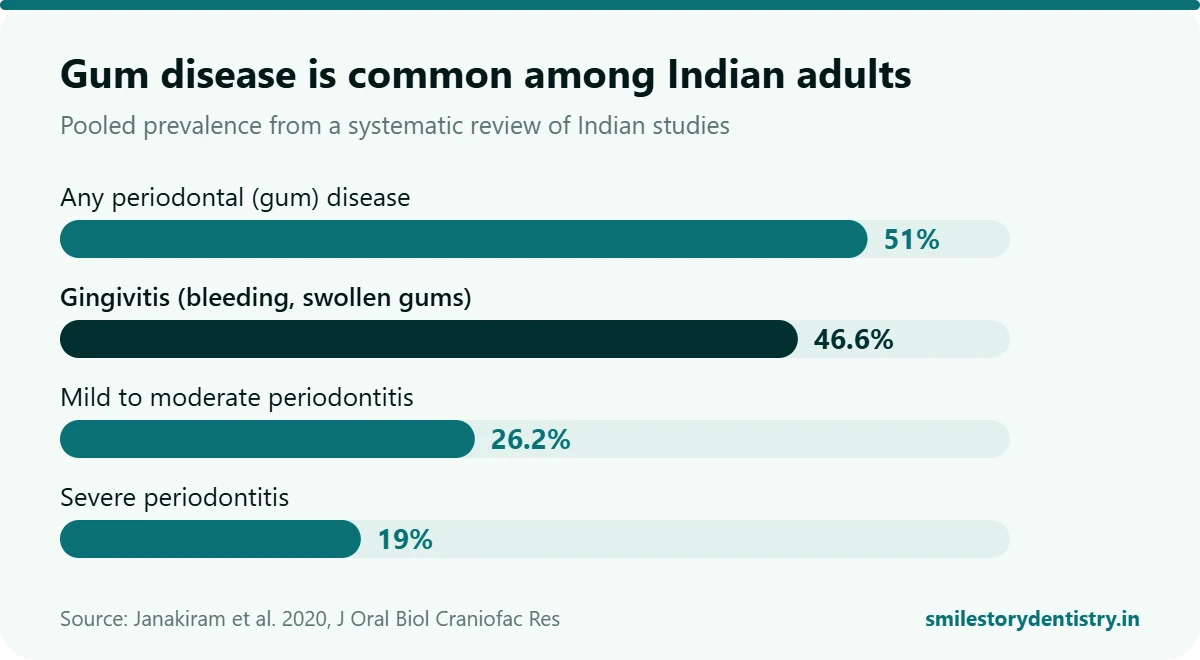
Bleeding gums when brushing: why it happens and how to stop it
Gums that bleed when you brush are not normal, but they are common and usually reversible. Here's what causes it, what to change at home,…
Read the guide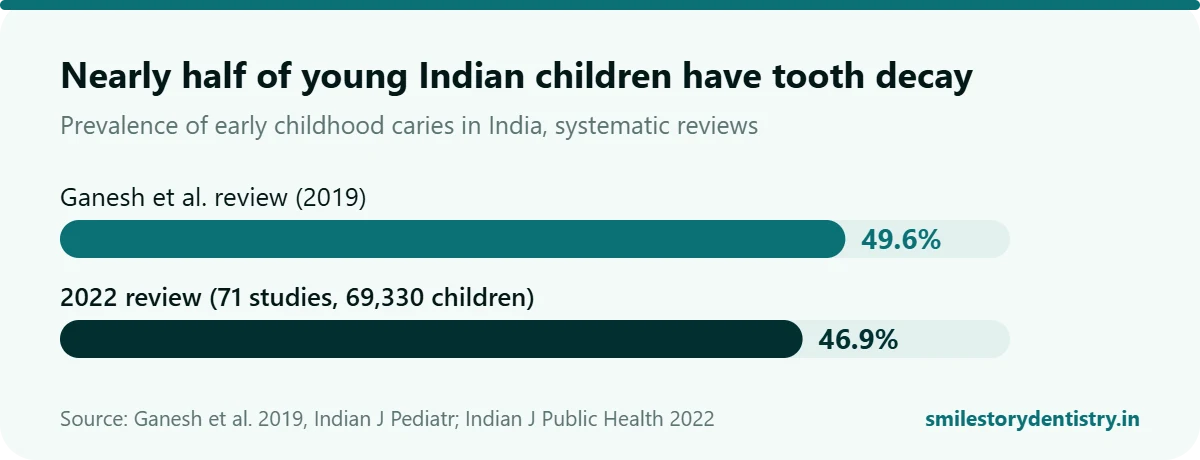
Cavities in children: causes, signs and prevention
Tooth decay is the most common chronic disease of childhood, and in India nearly half of children under six are affected. The good news:…
Read the guide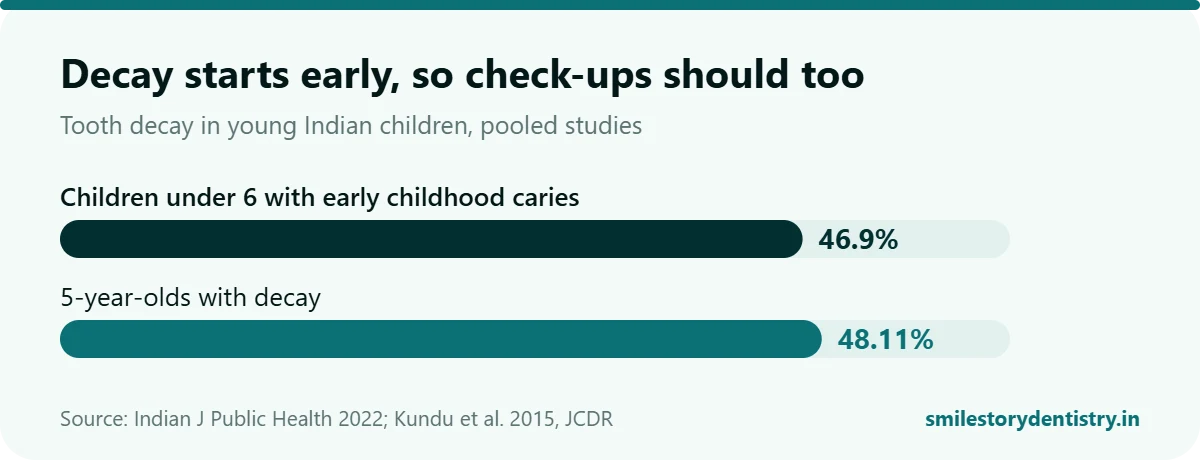
Your child's first dental visit: what age, why and what happens
Most parents wait until a toothache, but the first dental visit should come much earlier: by the first birthday, or within 6 months of the…
Read the guide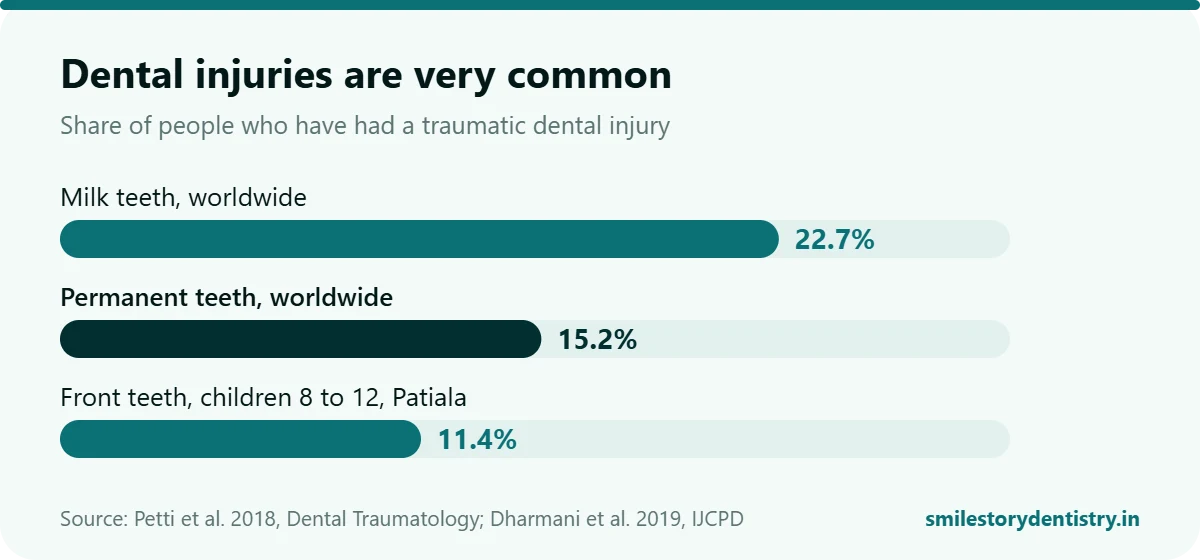
Chipped or broken tooth: what to do and how it's fixed
A chipped tooth is one of the most common dental injuries, from a fall, a cricket ball or biting something hard. Small chips are simple to…
Read the guide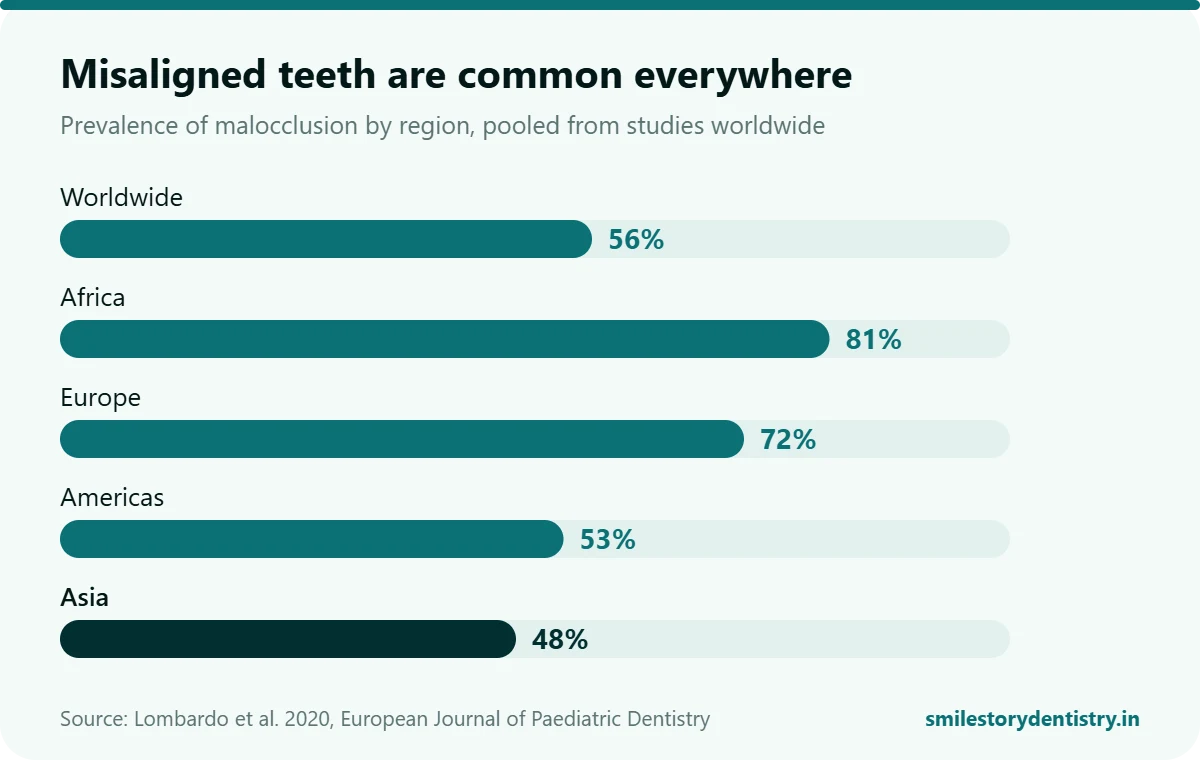
Crooked teeth: why they happen and how to straighten them
Crooked, crowded or rotated teeth are among the most common things dentists see. More than half the world's population has some degree of…
Read the guide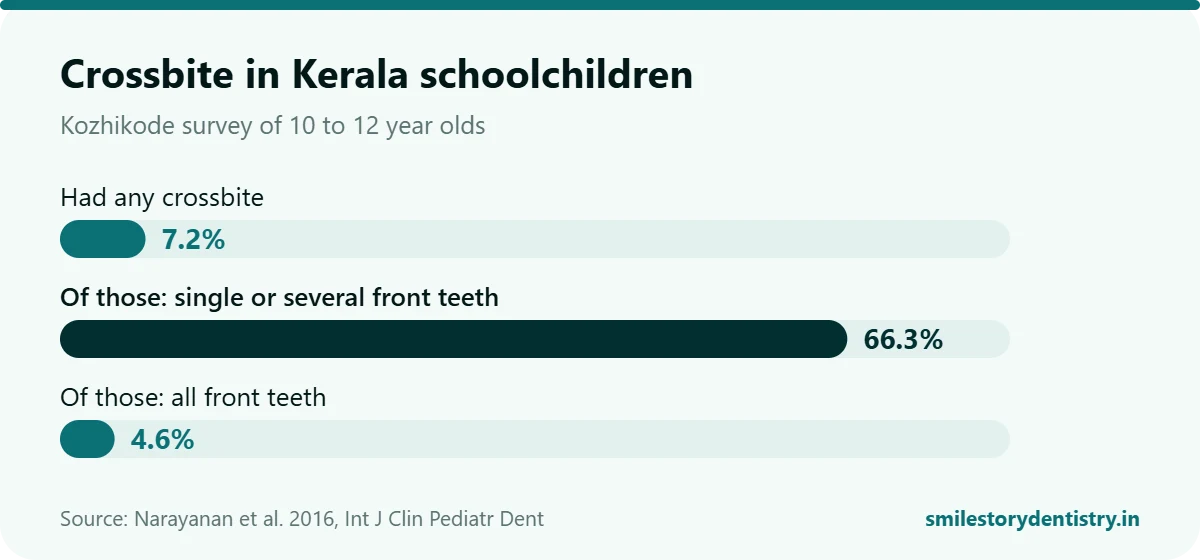
Crossbite: what it is and how it's corrected
In a normal bite, the upper teeth sit slightly outside the lower teeth. In a crossbite, one or more upper teeth bite on the inside instead.…
Read the guide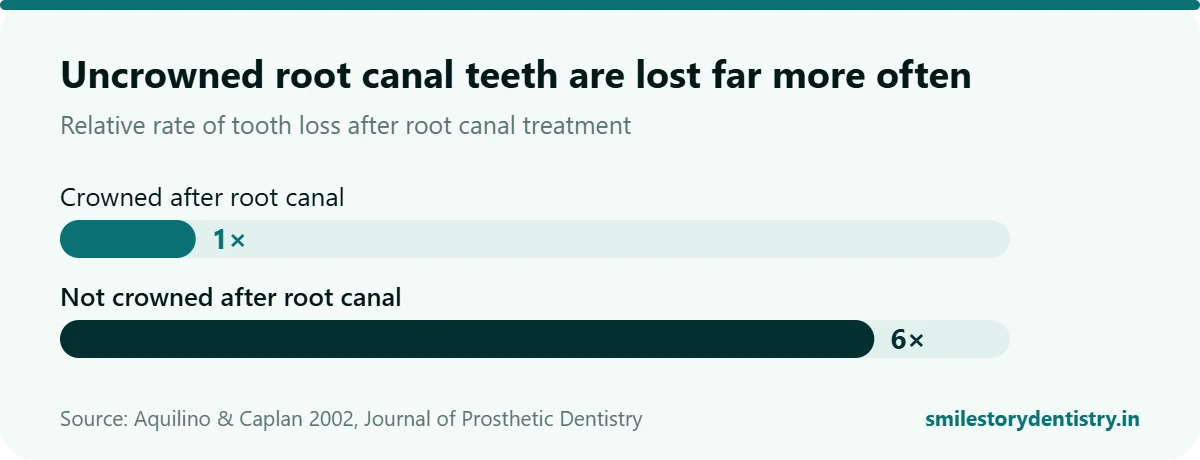
Do you need a crown after a root canal?
A root canal clears the infection, but it also leaves the tooth hollowed out and more likely to crack. For most back teeth, a crown is what…
Read the guide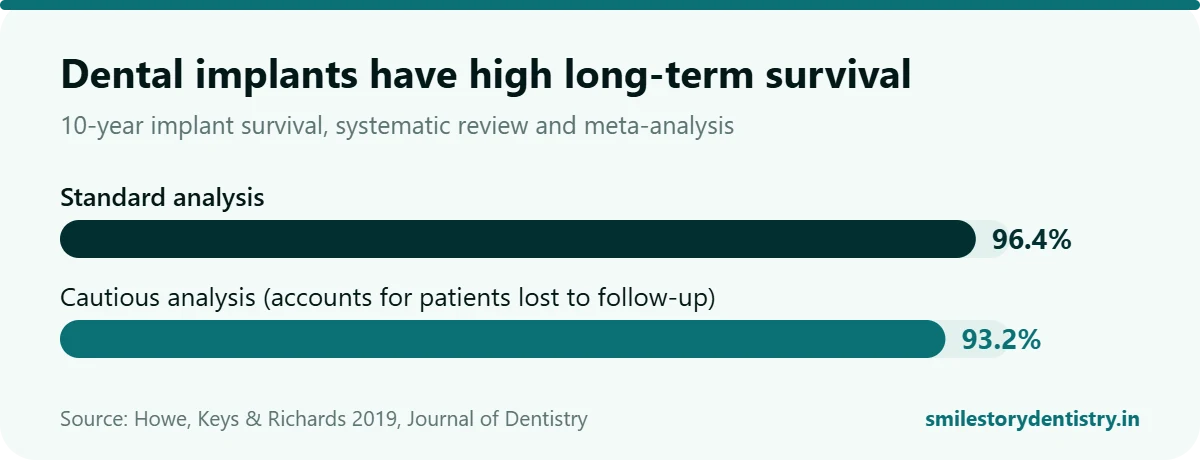
Dental implants vs dentures: which is right for you?
If you're missing teeth, the two main choices are dentures that you remove, and implants fixed in the jaw. There's also a middle option many…
Read the guide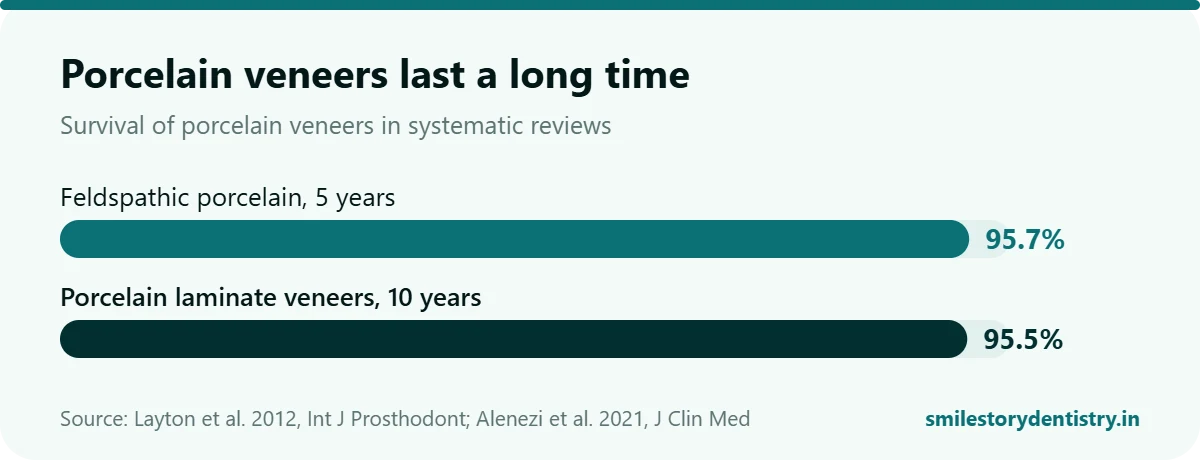
Dental veneers: what they are and how long they last
Veneers are thin, tooth-coloured shells bonded to the front of the teeth to change their colour, shape or size. They're one of the most…
Read the guide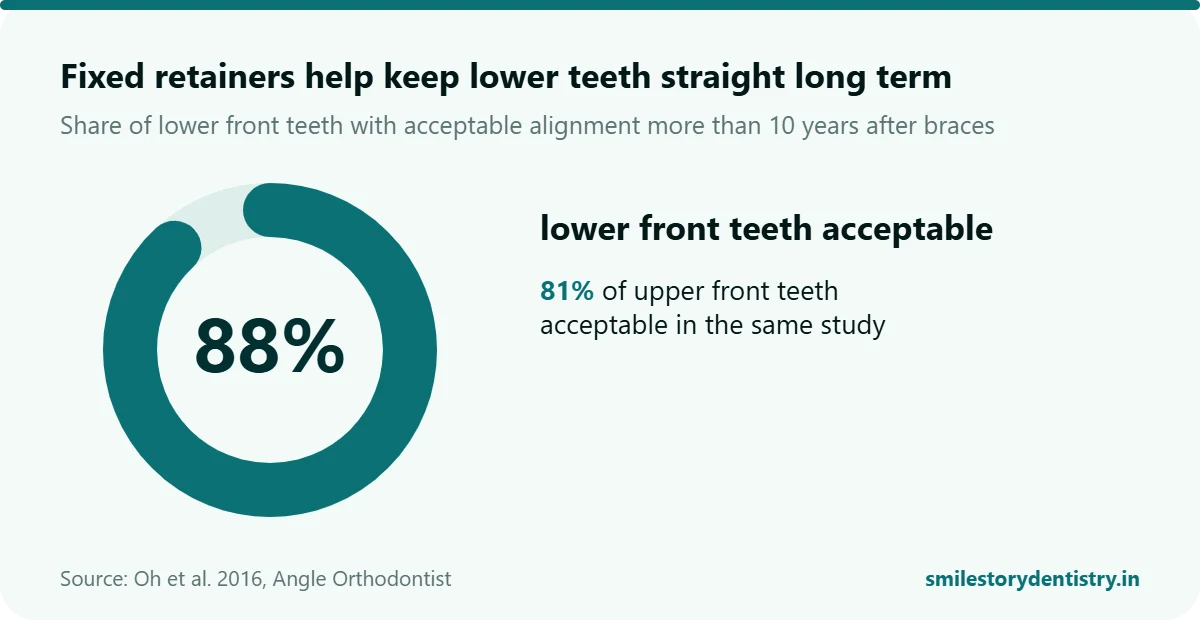
Fixed retainer: what to know about the wire behind your teeth
A fixed retainer, also called a bonded or permanent retainer, is a thin wire glued behind the front teeth after braces. It holds them in…
Read the guide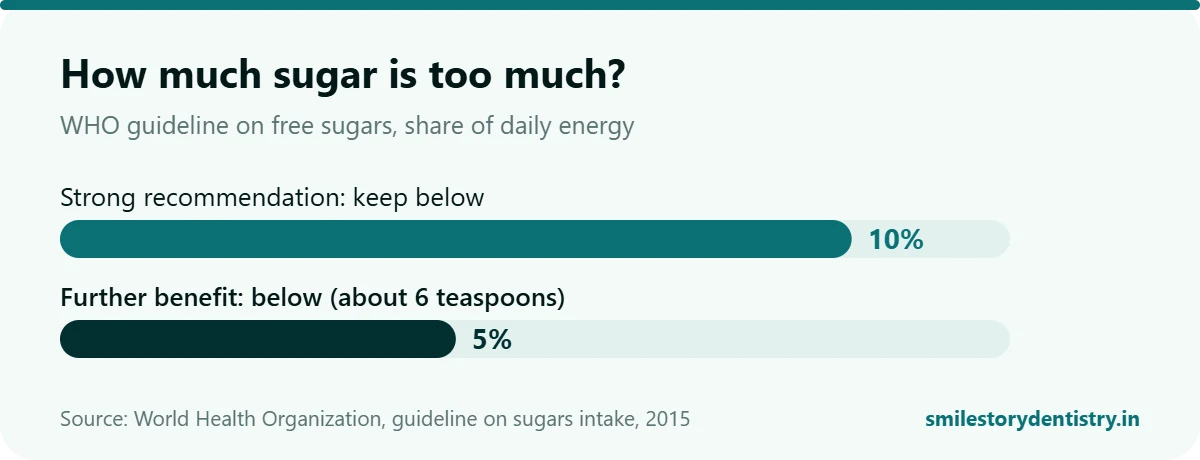
Foods good for your teeth, Indian kitchen edition
What you eat, and how often, shapes your risk of cavities and gum disease. You don't need special superfoods: many everyday Indian foods…
Read the guide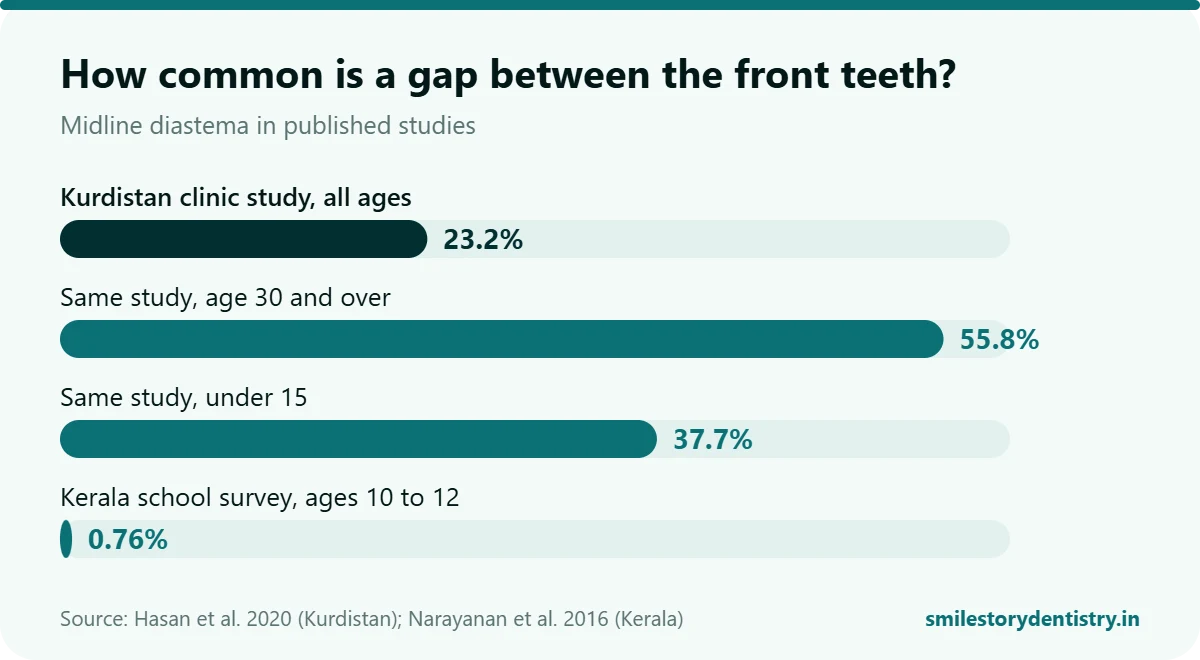
Gap between teeth: causes and every way to close it
A gap between the front teeth, called a diastema, is often harmless and some people love theirs. But a gap that's new or getting wider can…
Read the guide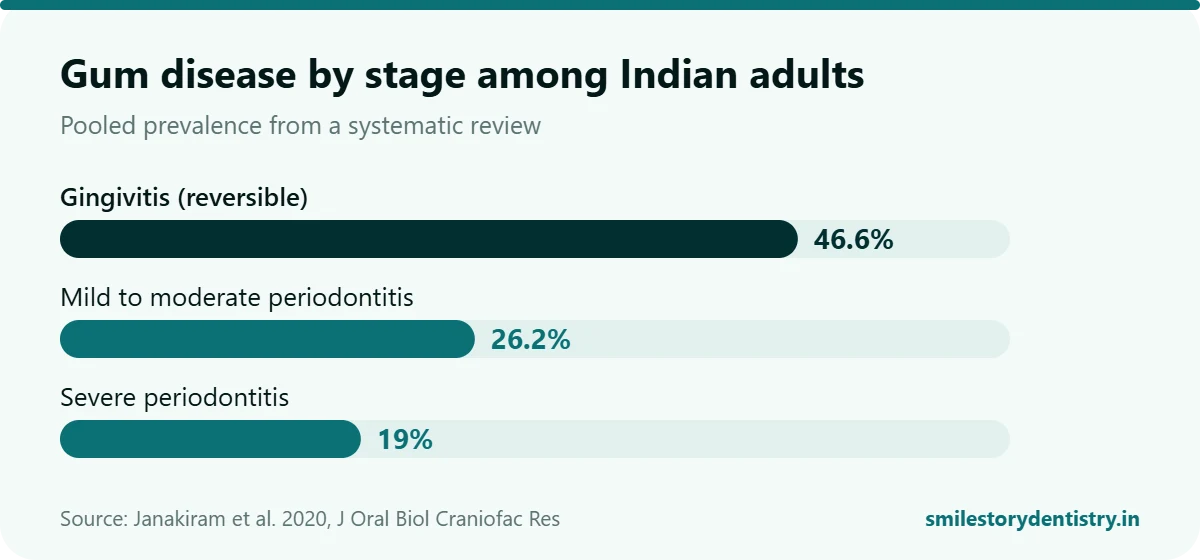
Gum disease symptoms: the signs at every stage
Gum disease is one of the most common conditions in India, and it's often painless until it's advanced. Knowing the signs at each stage…
Read the guide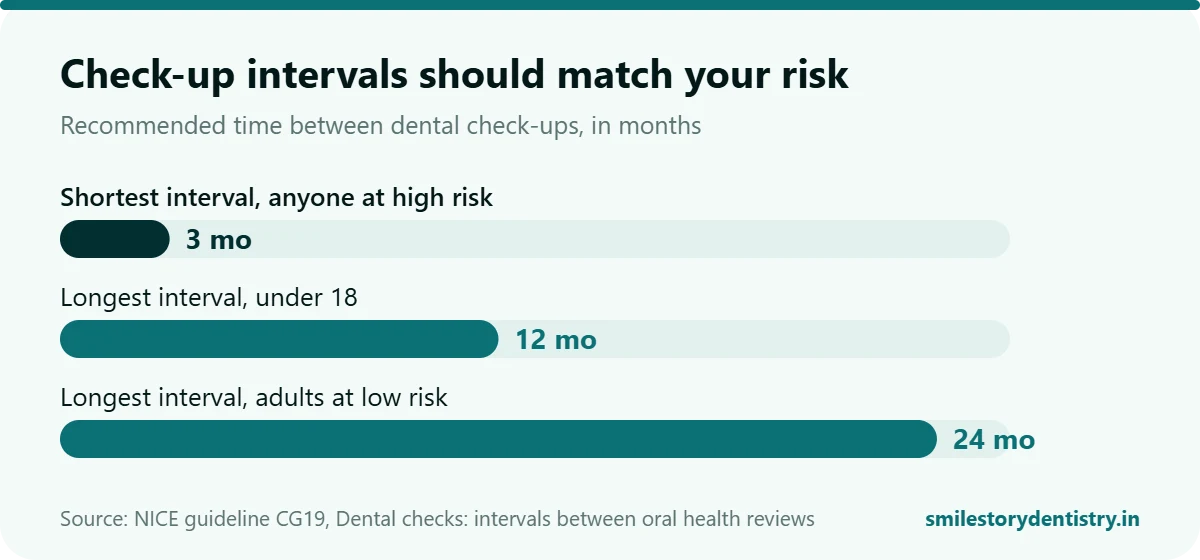
How often should you visit the dentist?
"Every six months" is the advice most people know, and it suits many. But guidelines actually recommend an interval based on your own risk,…
Read the guide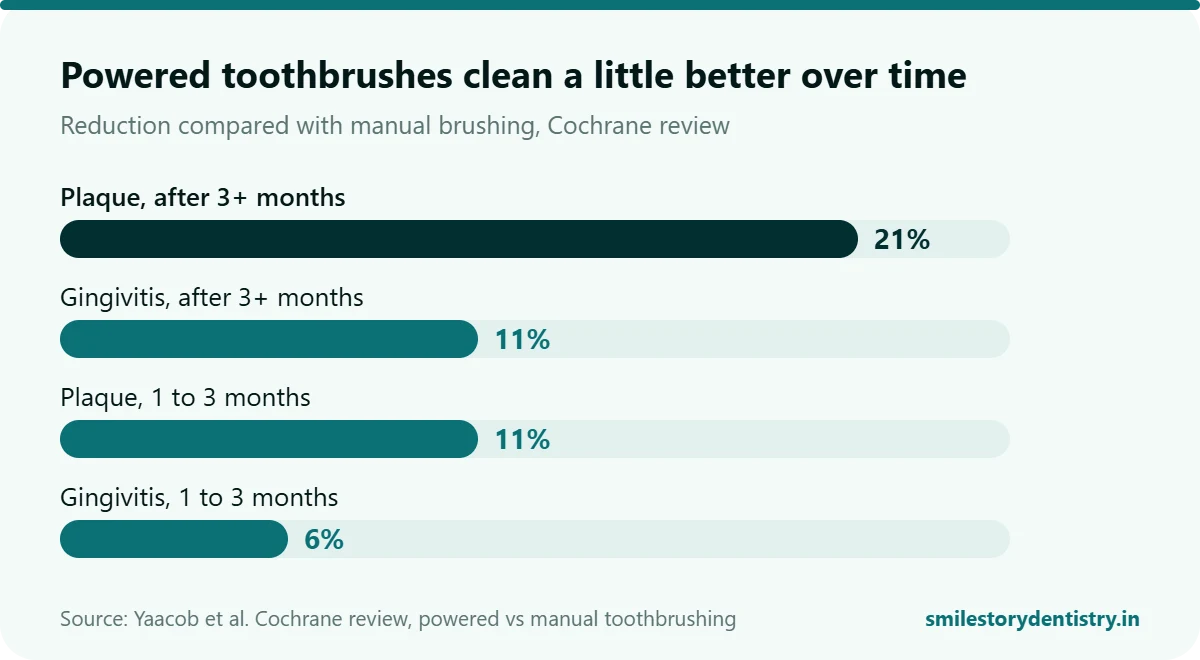
How to brush your teeth properly
Most people brush every day, but many miss the gumline, brush too hard or stop too soon. A few small changes in technique make a real…
Read the guide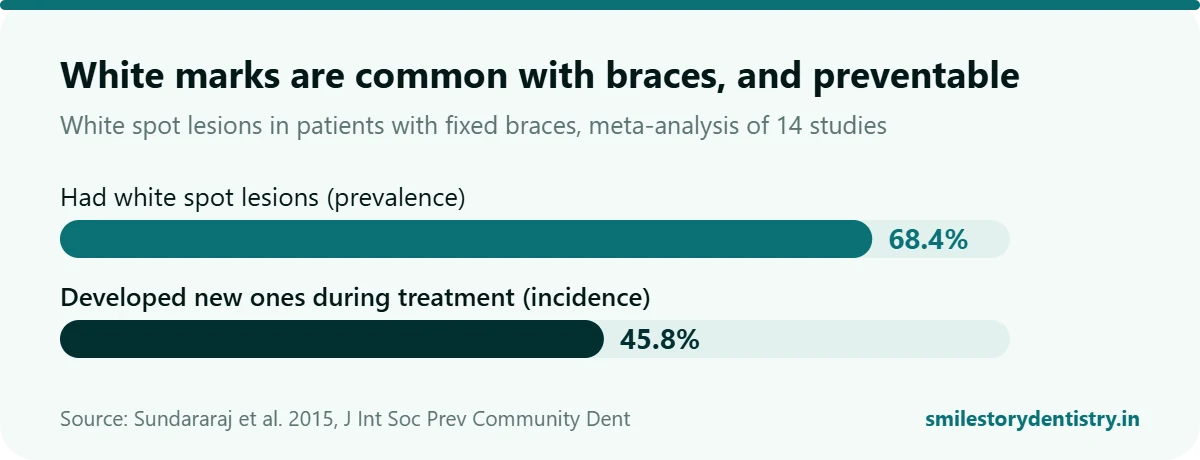
How to clean your teeth with braces
Brackets and wires create dozens of new places for plaque to hide. If it stays there, it can leave permanent white marks on the teeth when…
Read the guide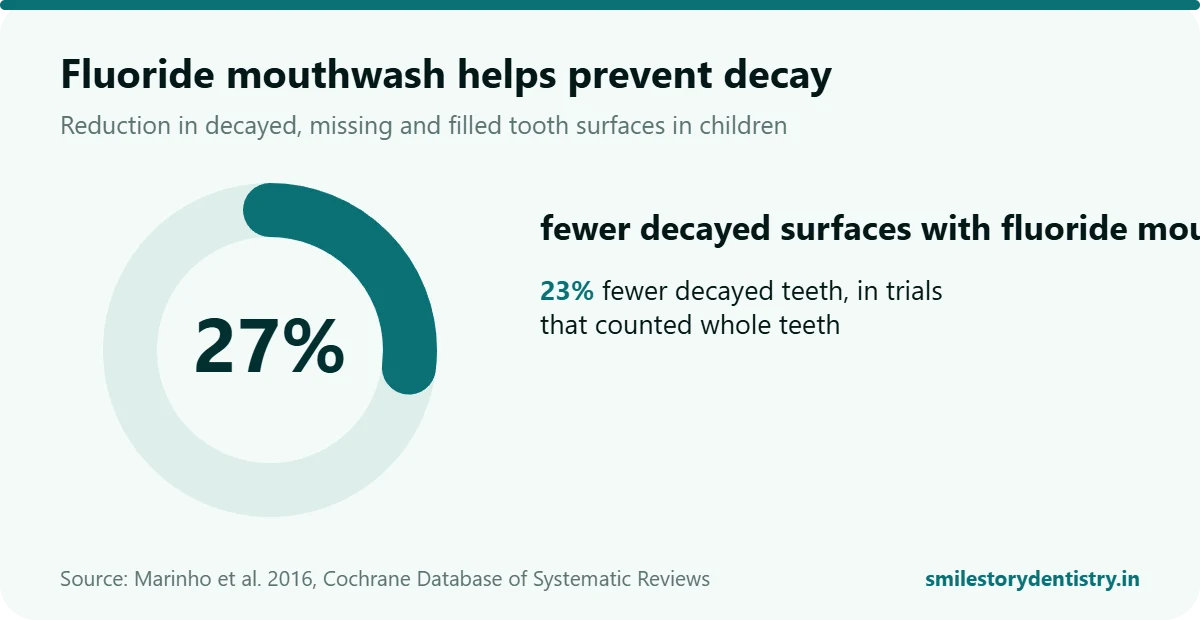
How to use mouthwash correctly
Mouthwash can add protection, but only if you use the right type at the right time. Use it straight after brushing and you may rinse away…
Read the guide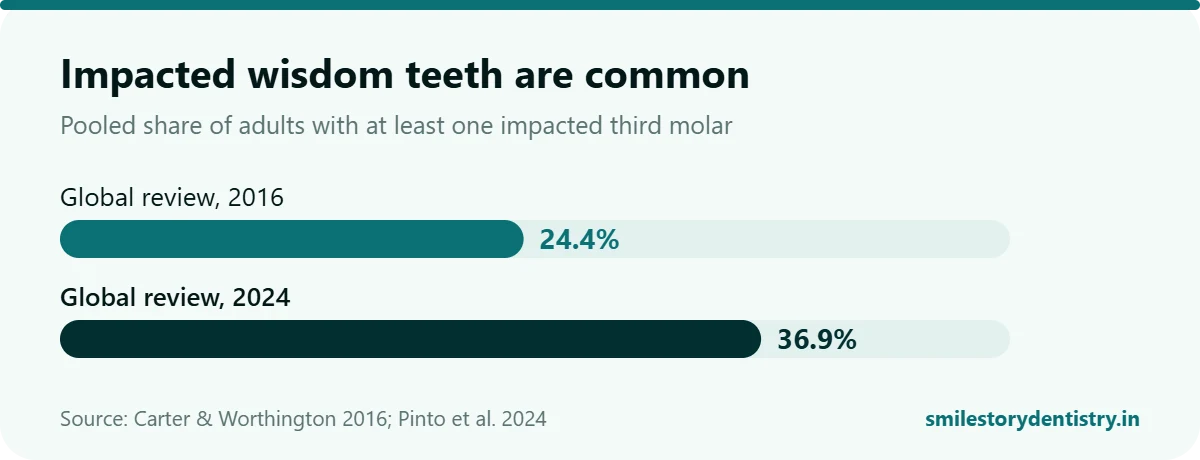
Impacted tooth: what it is and how it's treated
An impacted tooth is one that stays trapped in the gum or jawbone instead of coming through. Wisdom teeth are the usual suspects, but upper…
Read the guide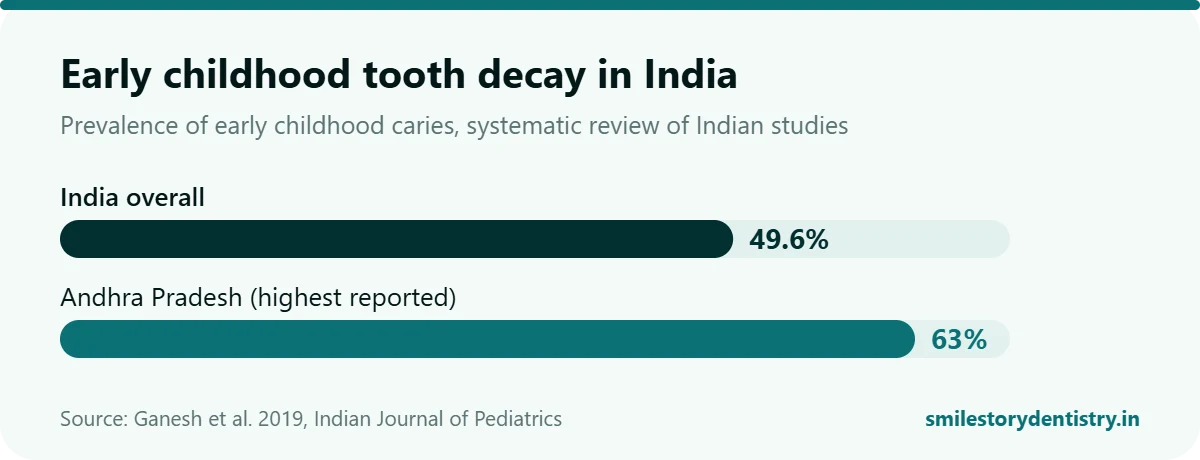
Infant oral care: from gums to first teeth
Good dental habits start before the first tooth. Gentle gum cleaning, the right amount of fluoride toothpaste and smart feeding habits can…
Read the guide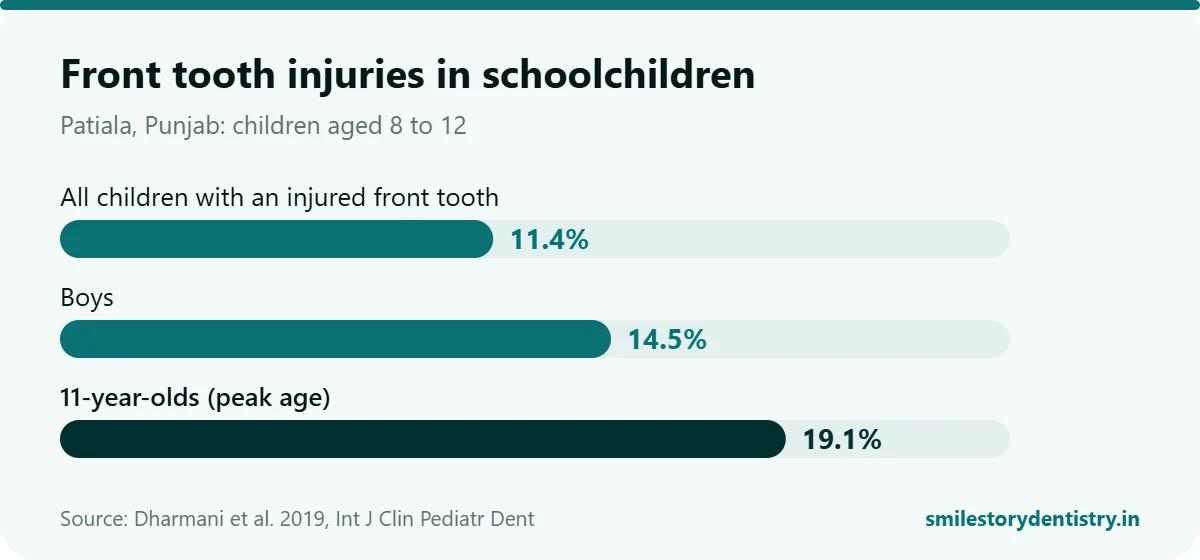
Knocked-out tooth: what to do in the first 60 minutes
When an adult tooth is knocked out, every minute counts. The cells on the root that let it reattach start to fail once the tooth dries out.…
Read the guide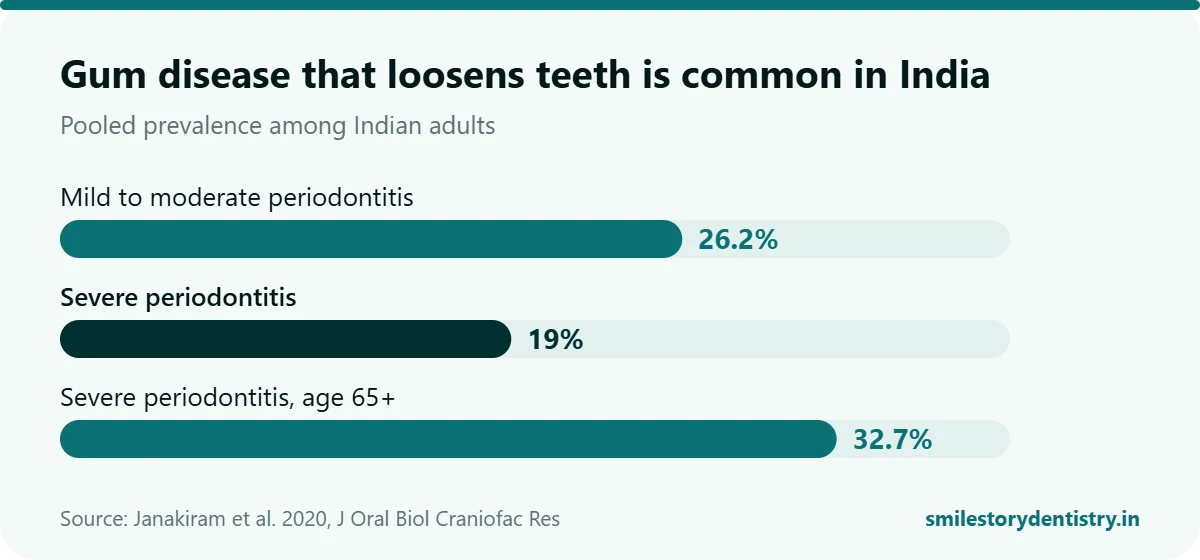
Loose tooth in adults: causes and whether it can tighten
Adult teeth shouldn't wobble. A loose tooth is a sign that something is affecting the bone or ligament that holds it, most often gum…
Read the guide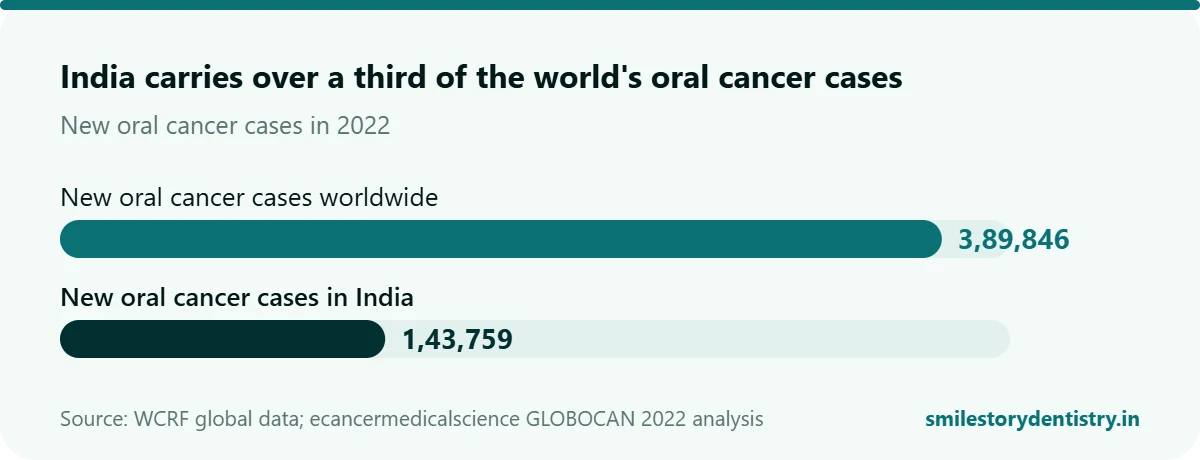
Mouth ulcers: causes, treatment and when to worry
Most mouth ulcers are harmless and heal within one to two weeks. A few are signs of something that needs attention, and one rule tells you…
Read the guide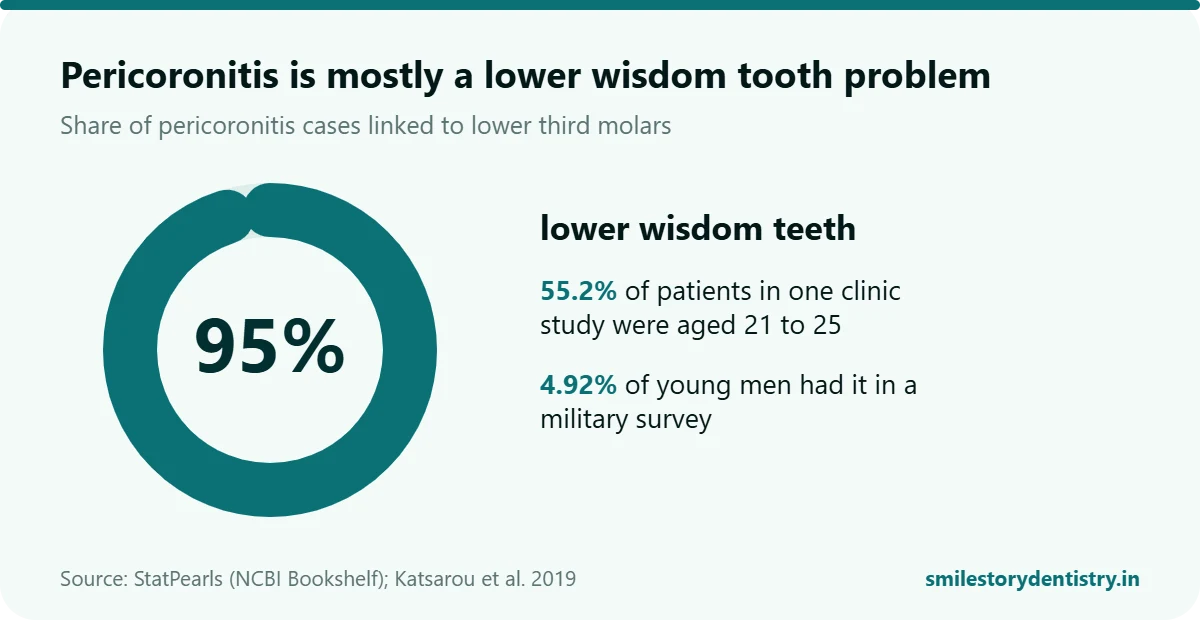
Pericoronitis: the swollen gum over your wisdom tooth
If the gum at the very back of your mouth is swollen, sore and tastes bad, you may have pericoronitis. It's an infection of the gum flap…
Read the guide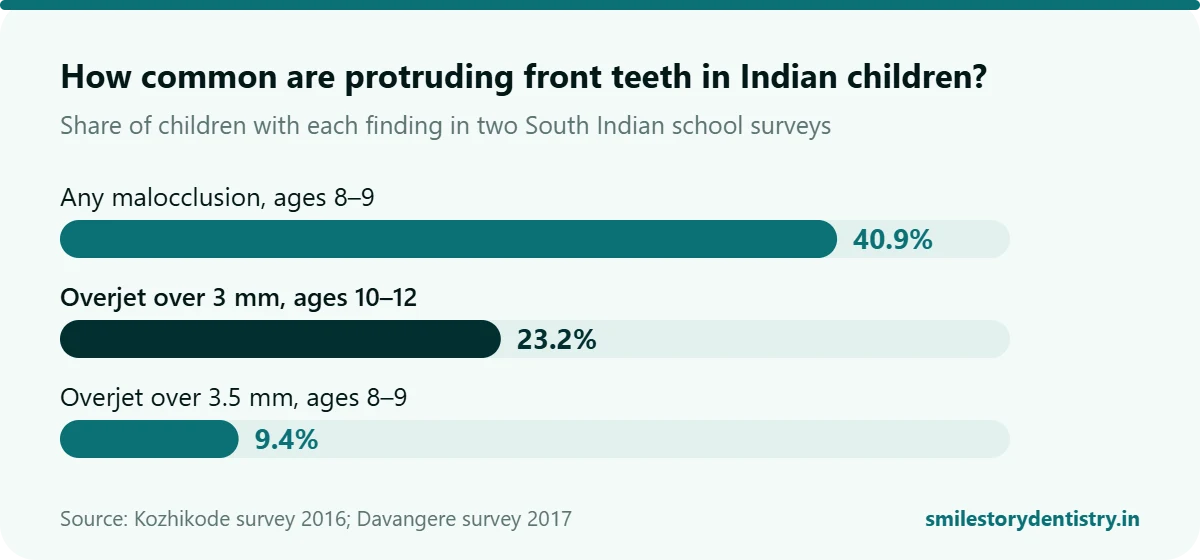
Proclined teeth: causes, risks and how to correct them
If your front teeth tilt forward or your lips don't close easily over them, you have proclined teeth. Here's why it happens, why it matters…
Read the guide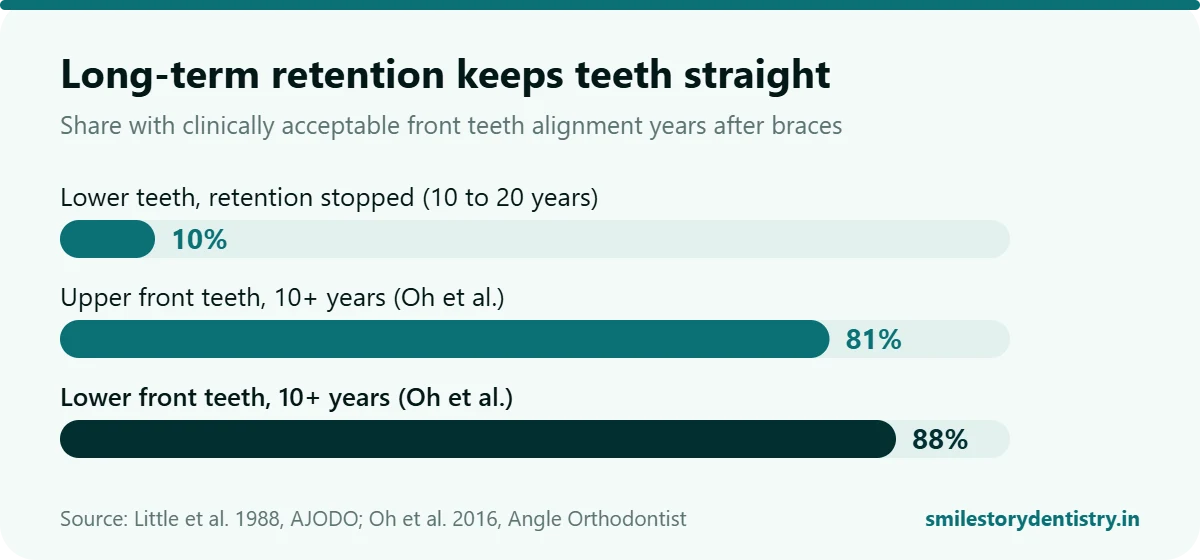
Retainers after braces: how long and why it matters
Getting your braces off isn't the end of treatment. Teeth naturally try to drift back, and the retainer is what keeps your new smile in…
Read the guide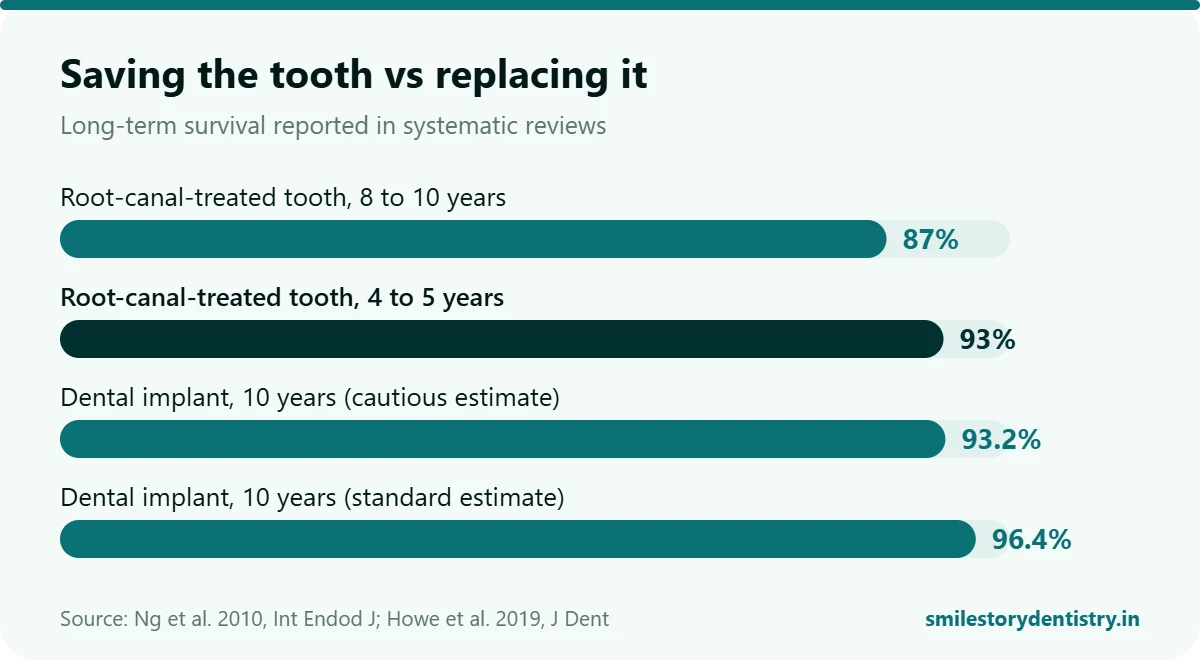
Root canal vs extraction: how to decide
When a tooth is badly infected, you usually have two choices: save it with a root canal, or remove it. Pulling a tooth looks quicker, but…
Read the guide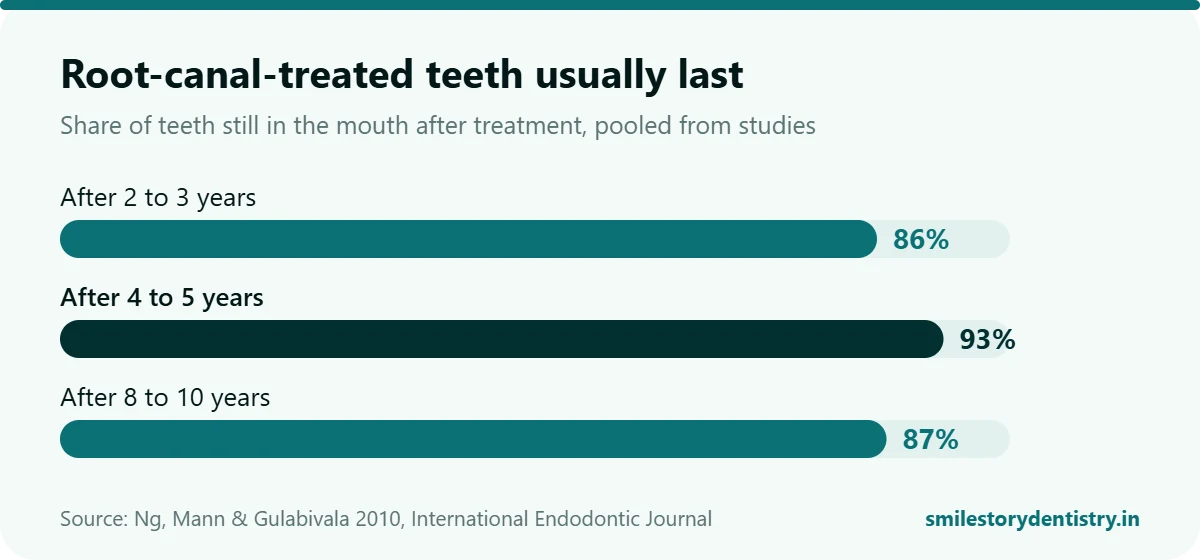
Signs you need a root canal, and when it's urgent
A root canal is needed when the soft tissue inside a tooth (the pulp) is inflamed or infected beyond repair. These are the symptoms that…
Read the guide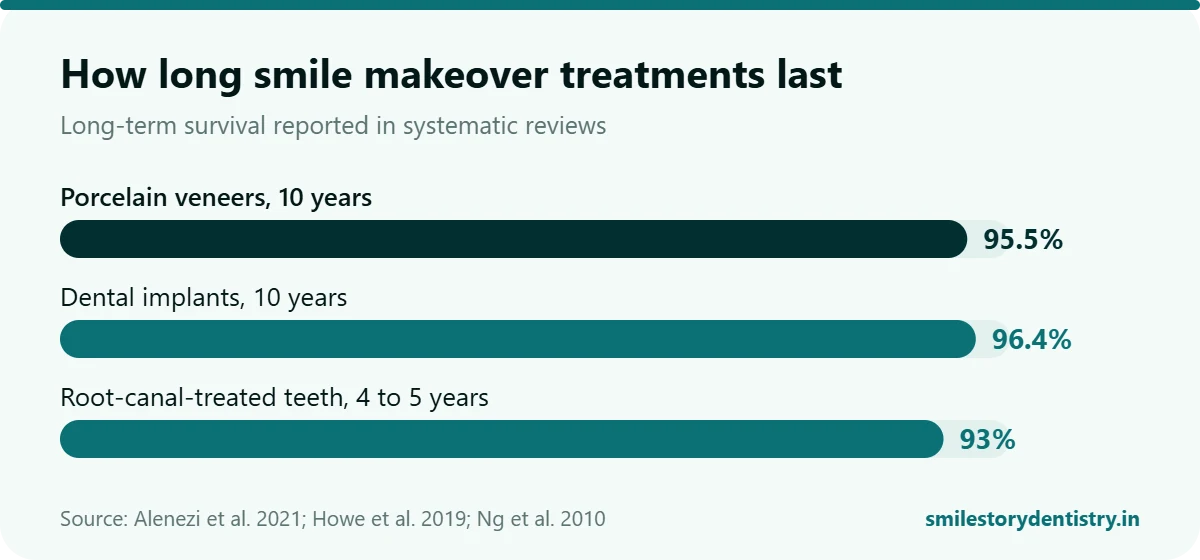
Smile correction: what it involves and how long it lasts
Smile correction, often called a smile makeover, combines treatments to improve how your teeth and gums look: colour, shape, spacing,…
Read the guide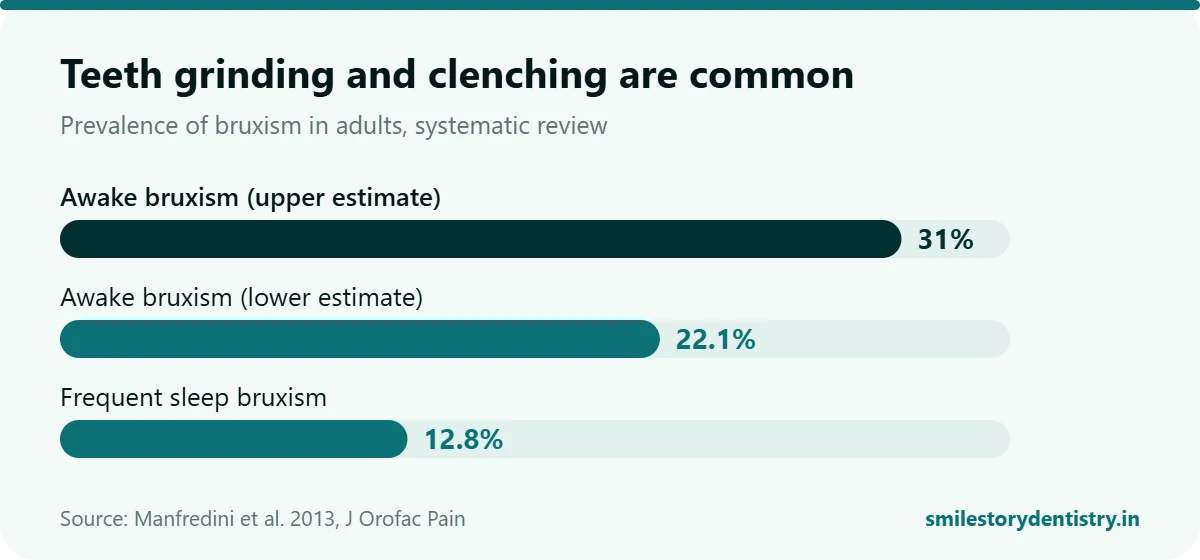
Stress and oral health: how stress affects your teeth and gums
Stress doesn't just stay in your head. It shows up as clenched jaws, worn teeth, ulcers, gum flare-ups and skipped brushing. Research links…
Read the guide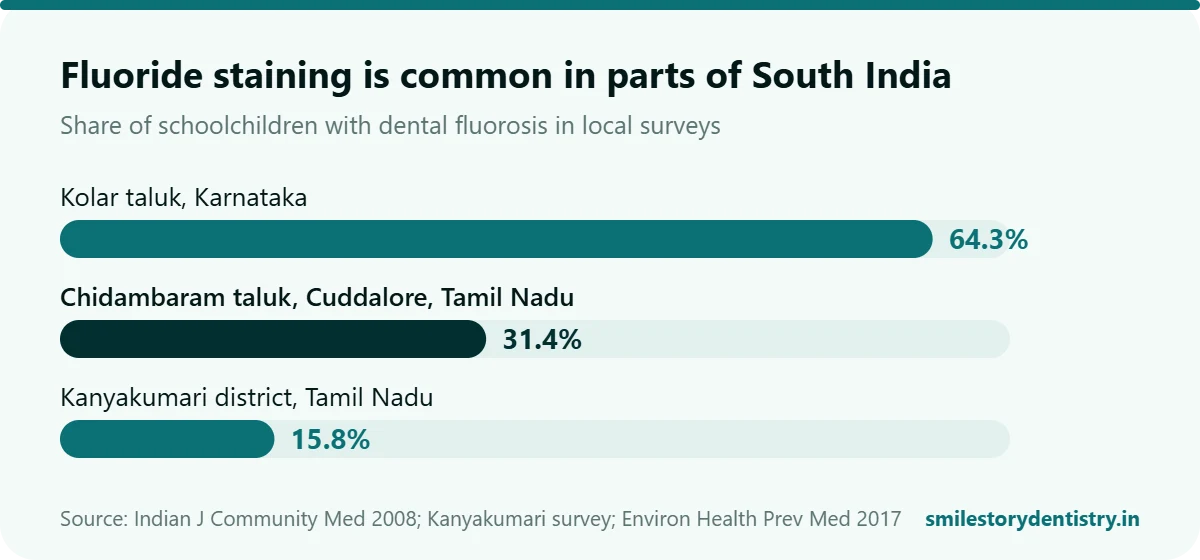
Teeth discoloration causes: what the colour tells you
Teeth change colour for many reasons: tea and coffee, tobacco, age, injury, medicines, and in parts of Tamil Nadu, high fluoride in the…
Read the guideTeeth whitening options compared
From whitening toothpaste to in-clinic treatments, there are many ways to brighten teeth, and they don't all work the same way. Here's how…
Read the guide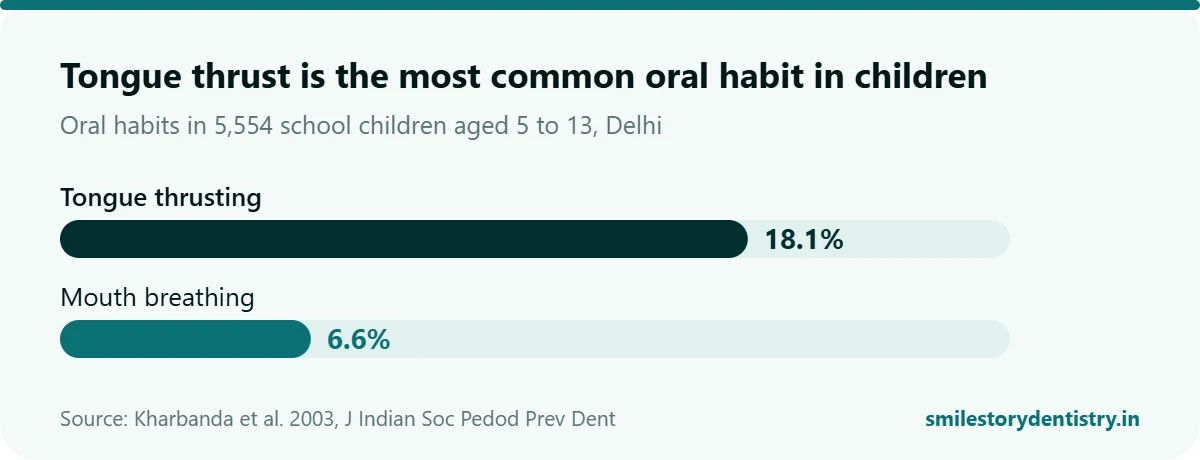
Tongue posture: where your tongue should rest, and why it matters
Your tongue rests against your teeth and palate for most of the day and pushes on them every time you swallow. In growing children, where it…
Read the guide
Toothache medicine: what actually works
When a tooth throbs at night, you want something that works now. Here's what the research says about painkillers for dental pain, which home…
Read the guide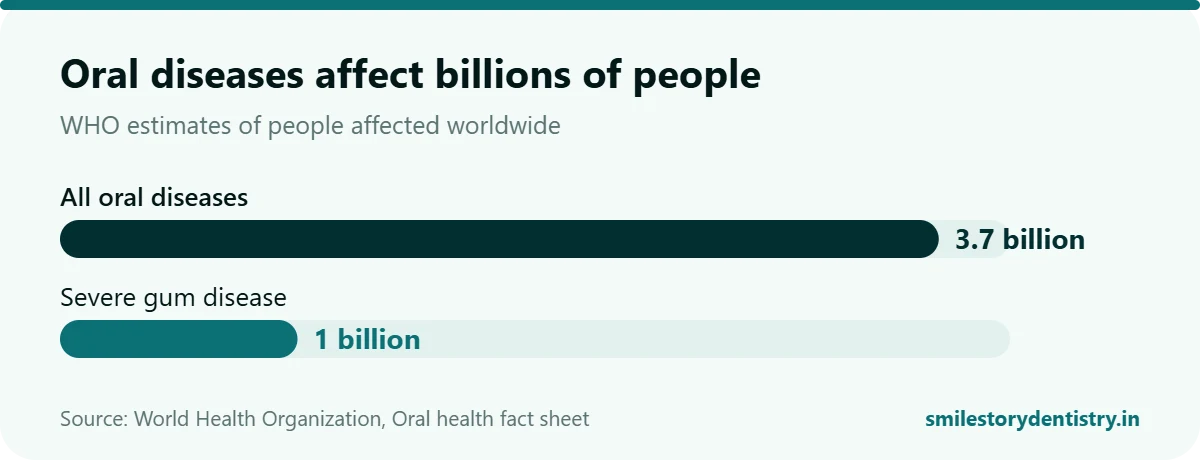
What happens if a cavity is left untreated
Untreated tooth decay in permanent teeth is the single most common health condition in the world. A cavity doesn't heal once it has formed a…
Read the guide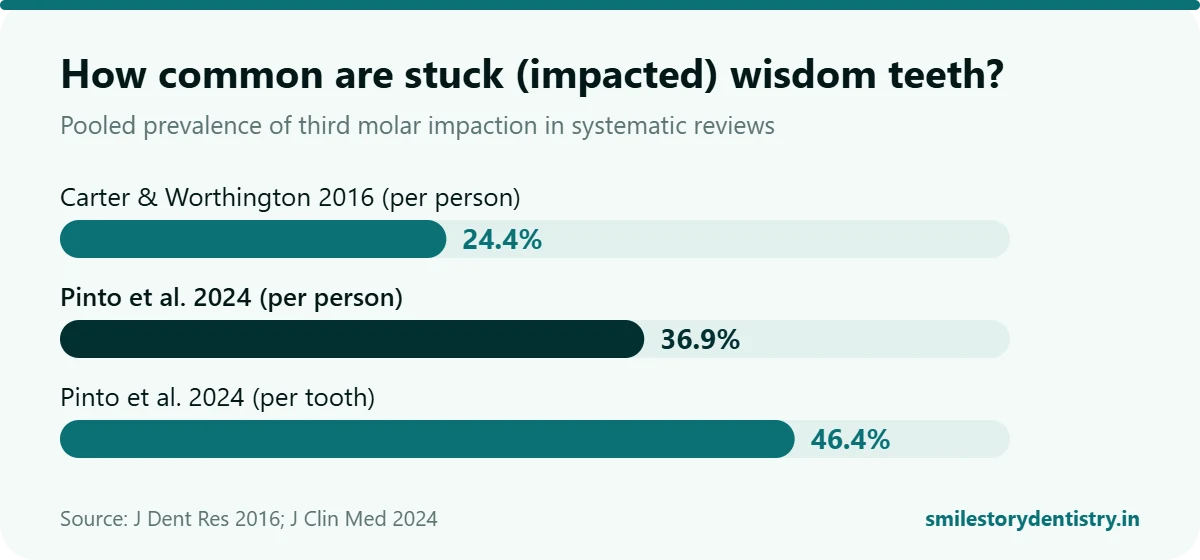
Wisdom tooth removal: when you need it and how to recover
Wisdom teeth are the last molars to arrive, usually between 17 and 25. Many come through without trouble. Others get stuck, decay or keep…
Read the guideReady for a calmer dental visit?
Same-day slots are often available. Book online and we'll confirm on WhatsApp, or call the clinic directly.