First aid for a knocked-out adult tooth
- 1
Find the tooth
Pick it up by the crown (the white part). Never touch the root.
- 2
Rinse briefly if dirty
Rinse for a few seconds in cold milk, saline or tap water. Don't scrub, use soap or wrap it in tissue.
- 3
Put it back if you can
Push it gently into the socket, the right way round, and bite on a clean cloth to hold it.
- 4
If you can't, keep it moist
Store it in a cup of milk, in saline, or inside the cheek (only for adults and older children who won't swallow it). Never let it dry.
- 5
Get to a dentist immediately
Ideally within 30 to 60 minutes. Bring the tooth and tell the clinic it's a knocked-out tooth.
Common mistakes that cost the tooth
- Wrapping it in tissue or paper, which dries the root
- Scrubbing the root or rinsing it for a long time
- Storing it in plain water for long periods (better than dry, but milk or saline is better)
- Holding it by the root
- Waiting to see if it settles; time is the biggest factor
Baby teeth are handled differently
Never put a knocked-out baby tooth back in. Replanting can damage the adult tooth developing underneath. Instead, control bleeding with a clean cloth and see a dentist to check for other injuries. If you're not sure whether it's a baby or adult tooth (common around ages 6 to 12), keep it in milk and let the dentist decide.
What the dentist will do
The tooth is cleaned and replanted (or its position checked), then held with a flexible splint to the neighbouring teeth for about 2 weeks. Most adult teeth that were out of the mouth need a root canal within the following weeks, and regular X-rays for a year or more to check healing. A tetanus booster may be advised if the tooth touched soil.
Make a dental first-aid kit for school bags and sports kits
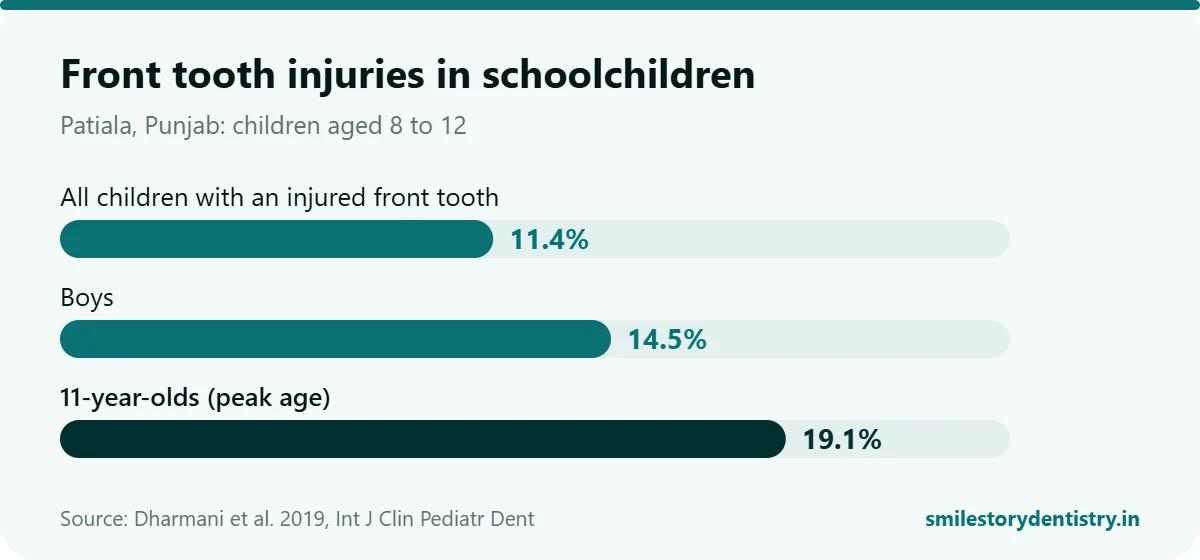
Most guides explain the steps. Few help you be ready. Since injuries peak around ages 10 to 12, put these in your child's sports bag or the school first-aid box:
- A small sealed carton of milk or a bottle of sterile saline
- A small clean container with a lid
- Clean gauze or a handkerchief
- An instant cold pack
- A card with the steps above and your dentist's phone number
- A custom mouthguard for cricket, hockey, kabaddi and skating, which prevents many injuries in the first place
Knocked-out teeth,
answered
Can't find your answer? We're one call away.
Call +91 76039 55135
Often, yes, if it's an adult tooth that's replanted quickly, ideally within 30 to 60 minutes, or kept moist in milk or saline until you reach a dentist.
Cold milk or sterile saline are good options. The person's own saliva, by holding it in the cheek, works for adults. Plain water is better than dry but not ideal for long.
No. Replanting a baby tooth can harm the adult tooth underneath. See a dentist to check the area.
Still bring it. Even if long-term survival is less likely, the dentist may replant it to preserve the bone and space while planning a replacement.
Usually, for adult teeth with fully formed roots. Your dentist will monitor it with X-rays and start treatment within a few weeks.
Research behind this guide
- International Association of Dental Traumatology. Guidelines for the management of traumatic dental injuries: avulsion of permanent teeth (2020)
- Dharmani CKK et al. Prevalence of traumatic dental injuries to anterior teeth in 8–12-year-old schoolchildren of Patiala city, Punjab. IJCPD, 2019
- Petti S, Glendor U, Andersson L. World traumatic dental injury prevalence and incidence, a meta-analysis. Dental Traumatology, 2018
- Patient.info. Knocked-out tooth
This guide is for general information and does not replace a dental examination. Every mouth is different, so book a consultation for advice on your own teeth.