Why adult teeth become loose
| Cause | Clues | What helps |
|---|---|---|
| Gum disease (periodontitis) | Bleeding gums, bad breath, receding gums, several loose teeth | Deep cleaning, gum treatment, splinting |
| Injury | Recent blow, one tooth loose, pain on biting | Splinting, monitoring, sometimes root canal |
| Grinding or clenching | Worn flat teeth, sore jaw in the morning | Night guard, bite adjustment |
| Infection at the root tip | Pain, swelling, a gum pimple | Root canal treatment |
| Pregnancy hormones | Slight looseness, swollen gums | Careful cleaning; usually settles |
| Bone loss conditions | Osteoporosis or certain medicines | Coordinated care with your doctor |
| Cyst or other jaw change (rare) | Swelling, a tooth slowly shifting | X-ray and specialist assessment |
Can a loose tooth tighten again?
Often, yes, if the cause is treated before too much bone is lost. Teeth loosened by a recent injury or by inflammation frequently firm up once the injury heals or the gums are treated. Teeth loosened by grinding can tighten once a night guard removes the overload.
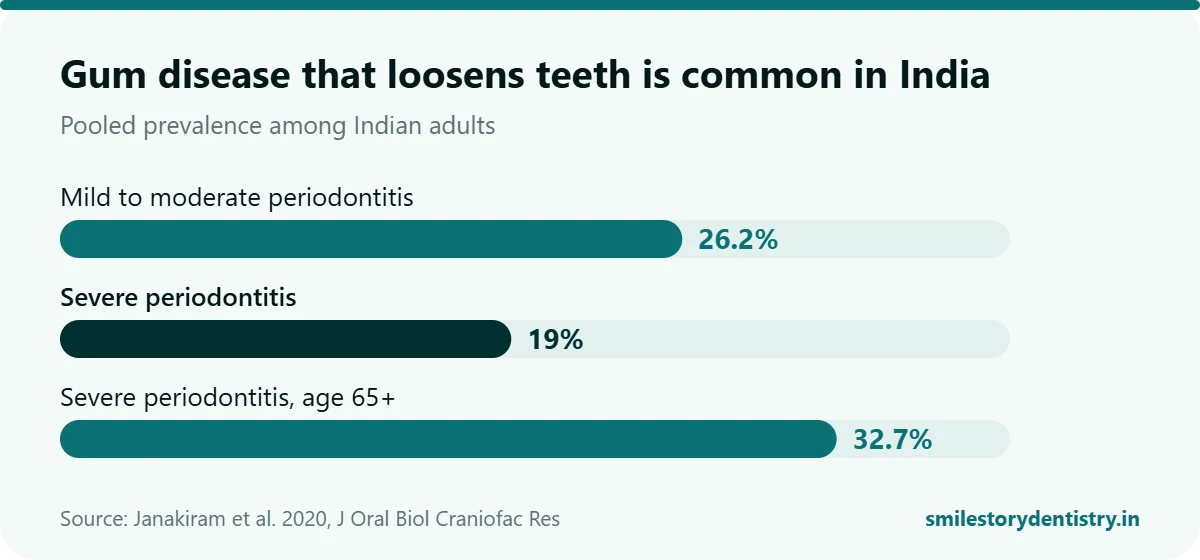
When gum disease has destroyed a large share of the bone, the tooth may stay somewhat mobile even after treatment. Splinting it to its neighbours can make it comfortable and functional for years.
What to do if your tooth feels loose
- 1
Don't wiggle it
Avoid testing it with your tongue or fingers.
- 2
Chew on the other side
Choose soft foods for now.
- 3
Keep cleaning gently
Brush softly around the tooth and rinse with warm salt water.
- 4
Book a dental visit soon
Within a few days, or the same day if there was an injury, swelling or pain.
How dentists treat loose teeth
- Scaling and root planing to remove deposits below the gumline
- Splinting: bonding the tooth to its neighbours for support
- A night guard for grinding
- Root canal treatment for an infected tooth
- Gum surgery or bone regeneration for advanced cases
- Extraction and replacement when the tooth can't be saved (see implants vs dentures)
Learn about gum treatment at Smile Story.
Why the first loose tooth is a whole-mouth warning
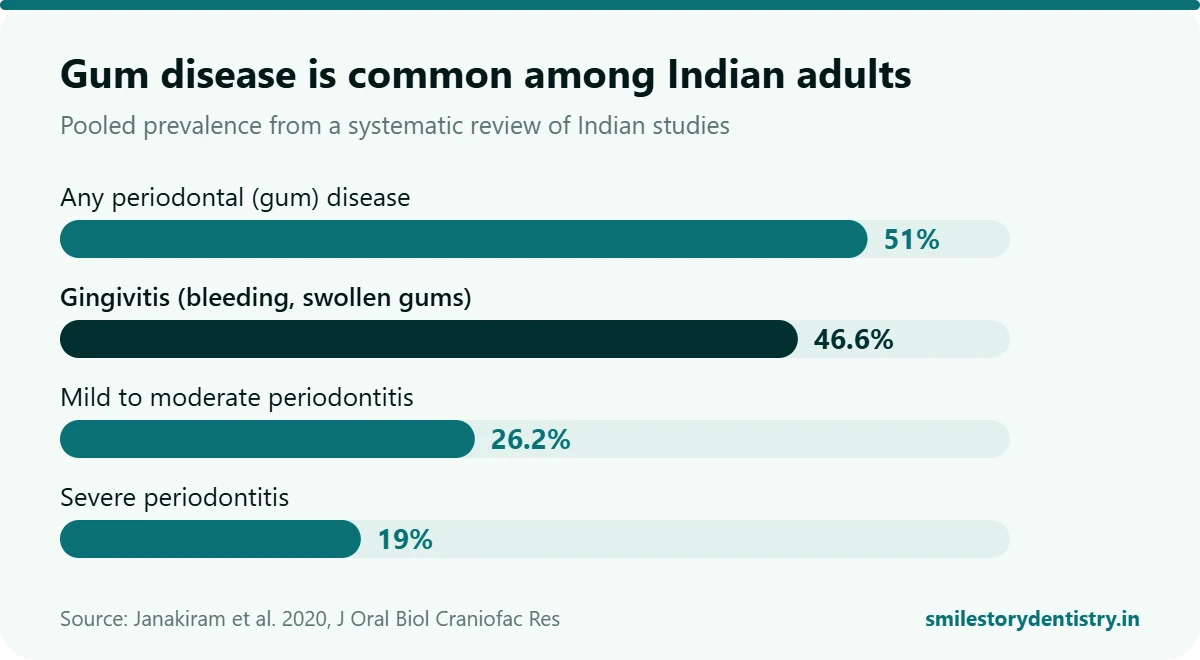
Gum disease rarely affects just one tooth. By the time one feels loose, others may have bone loss that you can't feel yet. Ask for full-mouth gum charting and X-rays, not just a look at the wobbly tooth.
Gum disease is also linked with diabetes in both directions, so if you've never had a blood sugar test, it's worth asking your doctor. Our guide to bleeding gums explains the early signs.
Loose teeth,
answered
Can't find your answer? We're one call away.
Call +91 76039 55135
It's always worth checking, because adult teeth shouldn't move. Most often it's gum disease, which is treatable, especially when caught early.
If the cause isn't treated, bone loss can continue until the tooth comes out. Early treatment can often stabilise it.
Many can, with gum treatment, splinting or a night guard depending on the cause. Teeth with very little remaining bone may need replacing.
Gum disease usually progresses without pain. Bleeding gums, bad breath and receding gums are often the only signs before teeth loosen.
Yes. Heavy grinding or clenching overloads the ligament around teeth. A night guard often lets them firm up again.
Research behind this guide
- Janakiram C, Mehta A, Venkitachalam R. Prevalence of periodontal disease among adults in India: a systematic review and meta-analysis. J Oral Biol Craniofac Res, 2020
- World Health Organization. Oral health fact sheet
- Sanz M et al. Scientific evidence on the links between periodontal diseases and diabetes: consensus report. J Clin Periodontol, 2018
- Cleveland Clinic. Tooth luxation (dislocated tooth): symptoms and treatment
This guide is for general information and does not replace a dental examination. Every mouth is different, so book a consultation for advice on your own teeth.