What the research says
A study of 2,412 adults in Toronto found people with higher perceived stress reported more oral pain and poorer oral health, even after accounting for other factors. Stress works through several routes: muscle tension, changes in the immune response, less saliva, and changes in habits like diet, smoking and brushing.
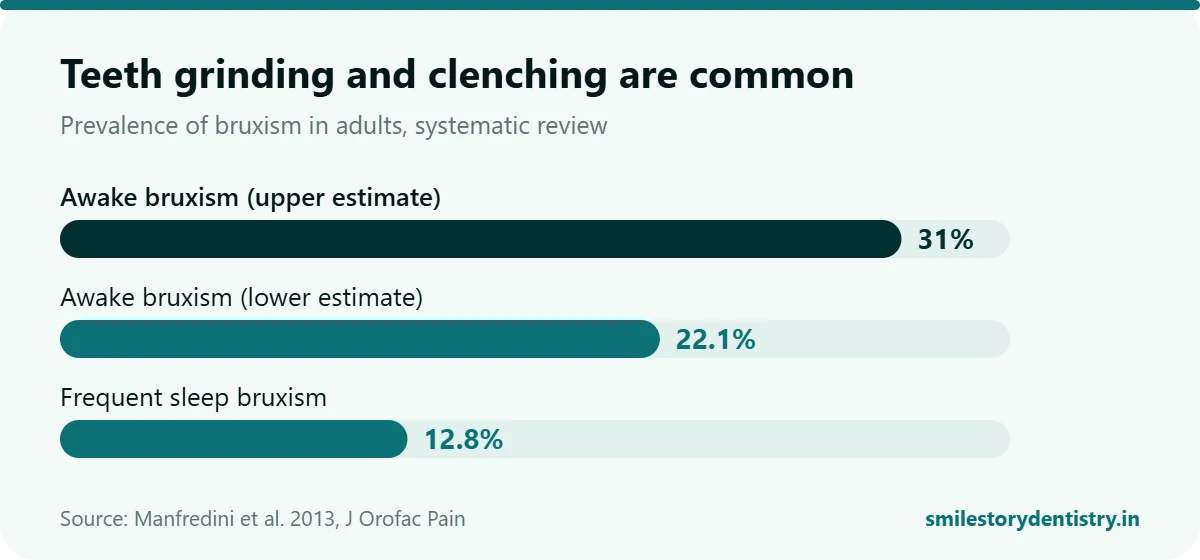
How stress shows up in your mouth
| Problem | Signs | What helps |
|---|---|---|
| Grinding and clenching (bruxism) | Worn or chipped teeth, morning jaw ache, headaches | Night guard, awareness, jaw relaxation |
| Jaw joint pain (TMJ) | Clicking, pain when chewing, limited opening | Soft diet, heat, guard, physiotherapy |
| Mouth ulcers | Painful sores during stressful weeks | See mouth ulcers |
| Gum flare-ups | Bleeding, swollen gums, pericoronitis around wisdom teeth | Extra cleaning; dental check |
| Dry mouth | Sticky mouth, more cavities | Water, sugar-free gum, review medicines |
| Neglected routines | Skipped brushing, more snacking | Simple non-negotiable habits |
| Cracked teeth | Sharp pain on biting | Dental check; a crown may be needed |
How to protect your teeth when life is stressful
- 1
Catch daytime clenching
Lips together, teeth apart, tongue resting on the palate. Check this whenever you look at your phone.
- 2
Keep the 2-minute minimum
Brush twice a day even on the worst days; it's the habit that protects everything else.
- 3
Watch stress snacking
Choose nuts, fruit or paneer over biscuits and sweet tea between meals.
- 4
Drink water
Stress and caffeine dry the mouth; saliva protects teeth.
- 5
Relax the jaw at night
Warm compress, gentle jaw stretches and limiting caffeine late in the day.
Signs your stress is already damaging your teeth
Most articles stop at "manage your stress". These are the specific signs that it's time for a night guard or a dental check:
- Flat, shiny or chipped edges on your front teeth
- Your partner hears you grinding at night
- Waking with a tired jaw, tight temples or headaches
- Scalloped marks along the sides of your tongue
- Ridges on the inside of your cheeks where teeth press
- New sensitivity to cold without a cavity
A custom night guard spreads the force and protects teeth and fillings. Ask about one at your next visit.
Stress and teeth,
answered
Can't find your answer? We're one call away.
Call +91 76039 55135
Yes, indirectly. Clenching and grinding can make teeth ache and sensitive, and strained jaw muscles can feel like toothache. A dentist can rule out a cavity or crack.
Stress can weaken the body's response to plaque bacteria and change habits like brushing, both of which make gum inflammation more likely.
If you grind or clench at night, especially with worn teeth or morning jaw pain, a custom night guard protects your teeth. Your dentist can check the signs.
Yes. Anxiety and some medicines used for it can reduce saliva. Sip water, chew sugar-free gum and tell your dentist.
Stress is a well-known trigger for common mouth ulcers. Most heal in 1 to 2 weeks; see a dentist for any that last longer than 3 weeks.
Research behind this guide
- Vasiliou A et al. Current stress and poor oral health. BMC Oral Health, 2016
- Manfredini D et al. Epidemiology of bruxism in adults: a systematic review of the literature. J Orofac Pain, 2013
- Head Start (US Office of Head Start). Discovering the impact of stress on oral health
This guide is for general information and does not replace a dental examination. Every mouth is different, so book a consultation for advice on your own teeth.