Step-by-step brushing technique
- 1
Use a pea-sized amount of fluoride toothpaste
On a soft-bristled brush with a small head.
- 2
Angle the brush 45 degrees to the gumline
Plaque collects where the tooth meets the gum.
- 3
Small gentle circles or short strokes
Two or three teeth at a time. Let the bristles do the work.
- 4
Clean every surface
Outside, inside and chewing surfaces. Tilt the brush upright for the inside of front teeth.
- 5
Follow a route
Upper right, upper left, lower left, lower right, about 30 seconds each, so you never skip an area.
- 6
Brush your tongue gently
Or use a tongue cleaner, to reduce bacteria and bad breath.
- 7
Spit, don't rinse
Leaving a thin layer of fluoride on the teeth boosts its protection.
Manual or electric toothbrush?
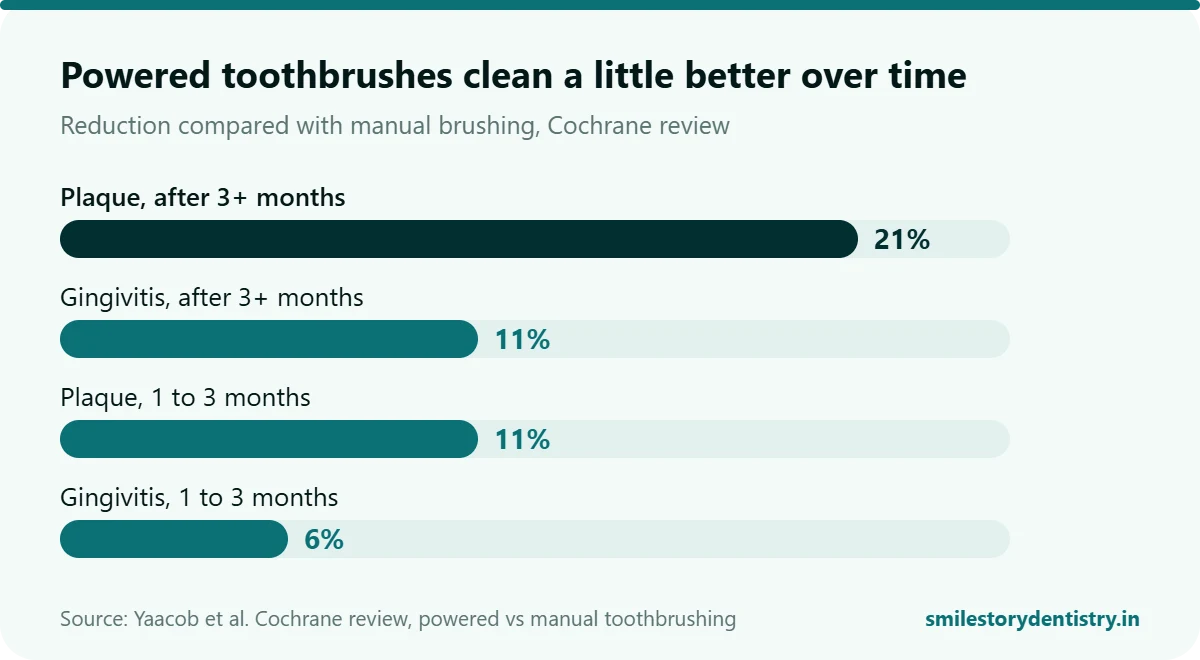
Both work when used properly. A Cochrane review found powered toothbrushes reduced plaque by 21% and gingivitis by 11% more than manual brushes after three months of use. Electric brushes help people with braces, limited hand movement, or who tend to scrub too hard, and many have 2-minute timers.
Common brushing mistakes
| Mistake | Why it matters | Fix |
|---|---|---|
| Brushing too hard | Wears enamel and pushes gums back | Soft brush, light grip like holding a pen |
| Missing the gumline | Plaque stays where gum disease starts | 45-degree angle into the gumline |
| Brushing for 30 seconds | Back teeth and inside surfaces get missed | 2 minutes with a timer or song |
| Rinsing straight after | Washes away fluoride | Spit, don't rinse |
| Brushing right after acidic food | Softened enamel wears faster | Wait about 30 minutes after citrus, cola or vinegar |
| Old, splayed brush | Cleans poorly | Replace every 3 months or sooner |
| Skipping between teeth | A brush can't reach a third of each tooth's surface | Floss or interdental brushes daily |
How much toothpaste?
| Age | Amount |
|---|---|
| Under 3 | A smear, the size of a grain of rice |
| 3 to 6 | A pea-sized amount, parent supervises |
| Over 6 and adults | A pea-sized amount of fluoride toothpaste |
The neem stick, charcoal and salt question
Many families in Tamil Nadu grew up with neem or babool twigs, tooth powder, salt or charcoal. Neem twigs (datun) have some antibacterial action, but they don't deliver fluoride, the single most proven protection against decay. Charcoal and coarse powders are abrasive and can wear enamel over years.
If you love the tradition, use it as an extra, not a replacement: brush twice a day with a soft brush and fluoride toothpaste first. If your gums still bleed after 2 weeks of good brushing, see our guide to bleeding gums.
Brushing,
answered
Can't find your answer? We're one call away.
Call +91 76039 55135
Either works. Brushing before breakfast coats teeth with fluoride before you eat. If you brush after, wait about 30 minutes after acidic foods or drinks.
Twice a day, thoroughly, is the recommendation. Brushing more often or harder can wear enamel and gums. Clean between teeth once a day.
Soft. Hard bristles don't clean better and can damage gums and enamel.
Yes. A toothbrush can't clean between teeth, where many cavities and gum problems start. Floss or interdental brushes reach those spaces.
Brush for them until about 7 or 8, then supervise. Make it fun with a 2-minute song and let them brush first, then you finish.
Research behind this guide
- Yaacob M et al. Powered versus manual toothbrushing for oral health. Cochrane Database of Systematic Reviews
- Marinho VCC et al. Cochrane reviews of fluoride therapies for preventing dental caries
- World Health Organization. Oral health fact sheet
This guide is for general information and does not replace a dental examination. Every mouth is different, so book a consultation for advice on your own teeth.