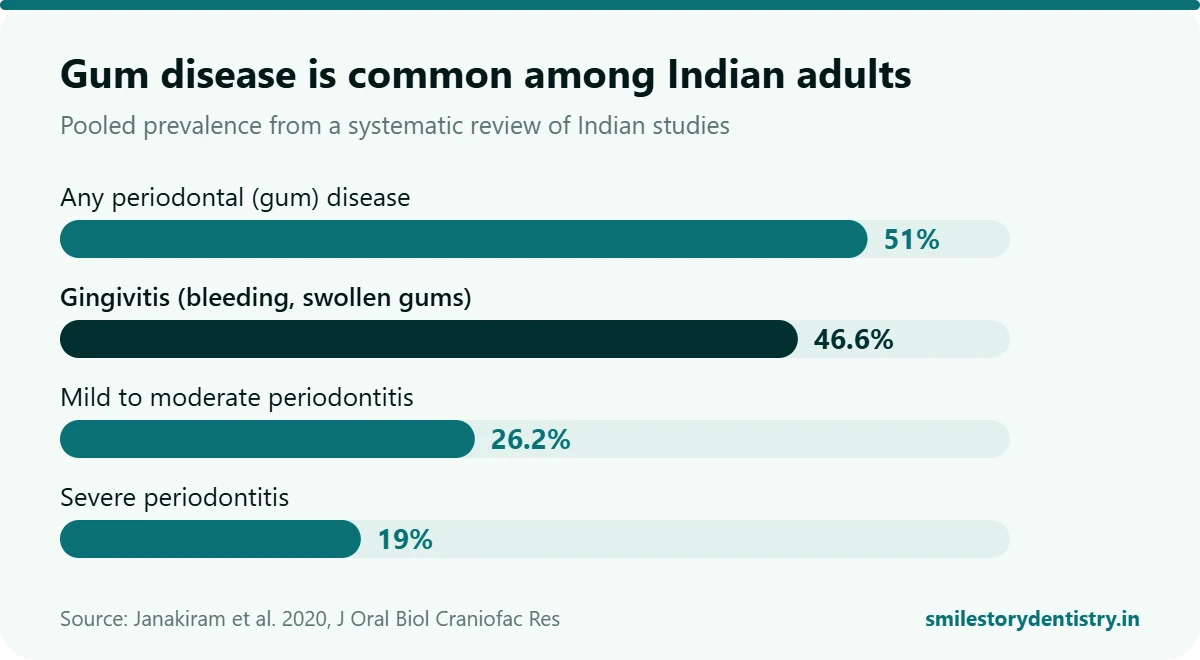
The stages of gum disease and their symptoms
| Stage | What's happening | Symptoms | Reversible? |
|---|---|---|---|
| Gingivitis | Plaque inflames the gum edge | Bleeding on brushing, red or puffy gums, bad breath | Yes |
| Early periodontitis | Gum starts separating from the tooth; small bone loss | Persistent bleeding, gum recession, sensitivity | Can be stopped |
| Moderate periodontitis | Deeper pockets, more bone loss | Bad taste, food trapping, teeth looking longer | Can be stopped; bone lost stays lost |
| Severe periodontitis | Major bone loss | Loose or drifting teeth, gaps, pus, changes in bite | Managed; some teeth may be lost |
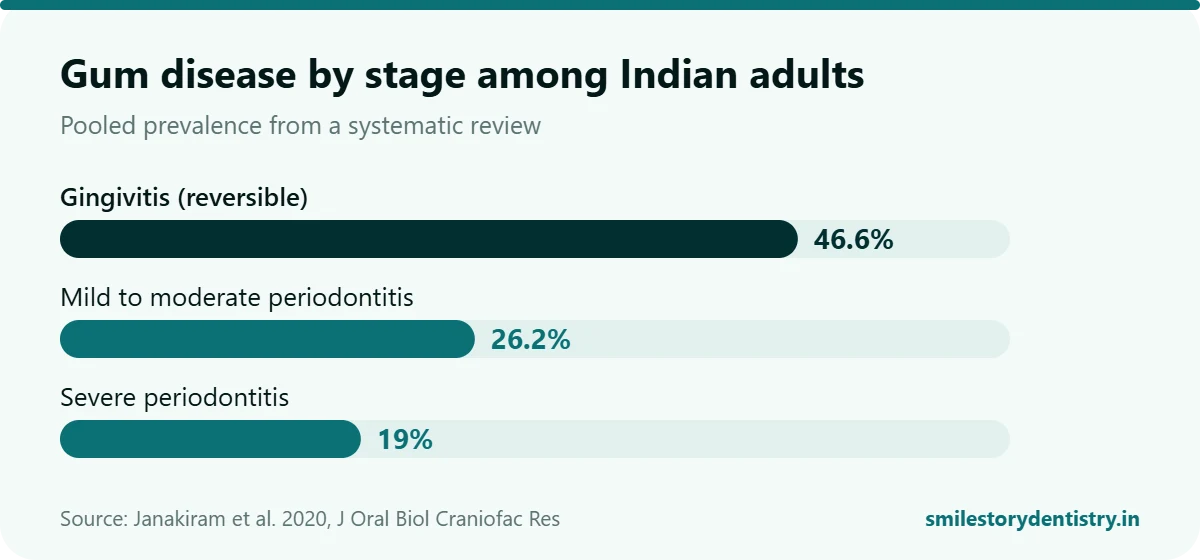
Symptoms to watch for
- Gums that bleed when you brush, floss or eat hard food (bleeding gums)
- Red, swollen or tender gums
- Bad breath or a bad taste that doesn't go away
- Gums pulling back, making teeth look longer
- New gaps between teeth, or teeth that have moved (gap between teeth)
- Loose teeth, or a change in how your teeth fit together (loose tooth in adults)
- Pus between the gums and teeth
Who is more at risk?
| Risk factor | Why |
|---|---|
| Smoking and chewing tobacco | Damages gums and hides bleeding, so disease goes unnoticed |
| Diabetes | Raises risk and severity; gum disease also makes sugar control harder |
| Age | Bone loss accumulates over years |
| Family history | Some people are more susceptible |
| Pregnancy and hormonal changes | Gums react more strongly to plaque |
| Stress and poor sleep | Can weaken defences and change habits (stress and oral health) |
| Crowded teeth, braces, old fillings | Harder to clean |
How gum disease is treated
- 1
Assessment
Measuring gum pockets around every tooth and X-rays of the bone.
- 2
Cleaning
Scaling and polishing for gingivitis; root planing below the gumline for periodontitis.
- 3
Home care coaching
Brushing at the gumline and cleaning between teeth with the right tools.
- 4
Re-check
Pockets are measured again after 6 to 8 weeks.
- 5
Advanced care if needed
Gum surgery or regenerative procedures for deep pockets.
- 6
Maintenance
Cleanings every 3 to 4 months to keep it stable.
The 30-second gum self-check
Because early gum disease rarely hurts, a quick monthly look catches what you'd otherwise miss. In good light, after brushing:
- 1
Colour
Healthy gums are firm and pale pink (or evenly pigmented). Look for red or dark-red edges.
- 2
Shape
Healthy gum comes to a point between teeth. Look for puffy, rounded edges.
- 3
Bleeding
Spit after brushing. Any pink, regularly, is a sign.
- 4
Length
Do any teeth look longer than they used to, or show a darker root?
- 5
Movement
Gently press each front tooth with a finger. None should move.
Two or more of these, or any loose tooth, means it's time for a gum check.
Gum disease,
answered
Can't find your answer? We're one call away.
Call +91 76039 55135
Bleeding when you brush or floss is usually the first sign, often with slightly red or swollen gum edges. It's easy to ignore because it rarely hurts.
Gingivitis can be fully reversed. Periodontitis can be stopped and kept stable, but bone that has been lost doesn't fully grow back.
The bacteria can pass through saliva, but gum disease develops mainly because of plaque, habits and individual susceptibility.
Yes. Bacteria in gum pockets produce strong odours. Bad breath that doesn't improve with brushing is worth a gum check.
Strong research links it with diabetes in both directions, and studies have found associations with heart disease and pregnancy complications.
Research behind this guide
- Janakiram C, Mehta A, Venkitachalam R. Prevalence of periodontal disease among adults in India: a systematic review and meta-analysis. J Oral Biol Craniofac Res, 2020
- Sanz M et al. Scientific evidence on the links between periodontal diseases and diabetes: consensus report. J Clin Periodontol, 2018
- Indian Dental Association. Gum and periodontal diseases
- National Institute of Dental and Craniofacial Research. Periodontal (gum) disease
- American Academy of Periodontology. Gum disease information
This guide is for general information and does not replace a dental examination. Every mouth is different, so book a consultation for advice on your own teeth.