What is pericoronitis?
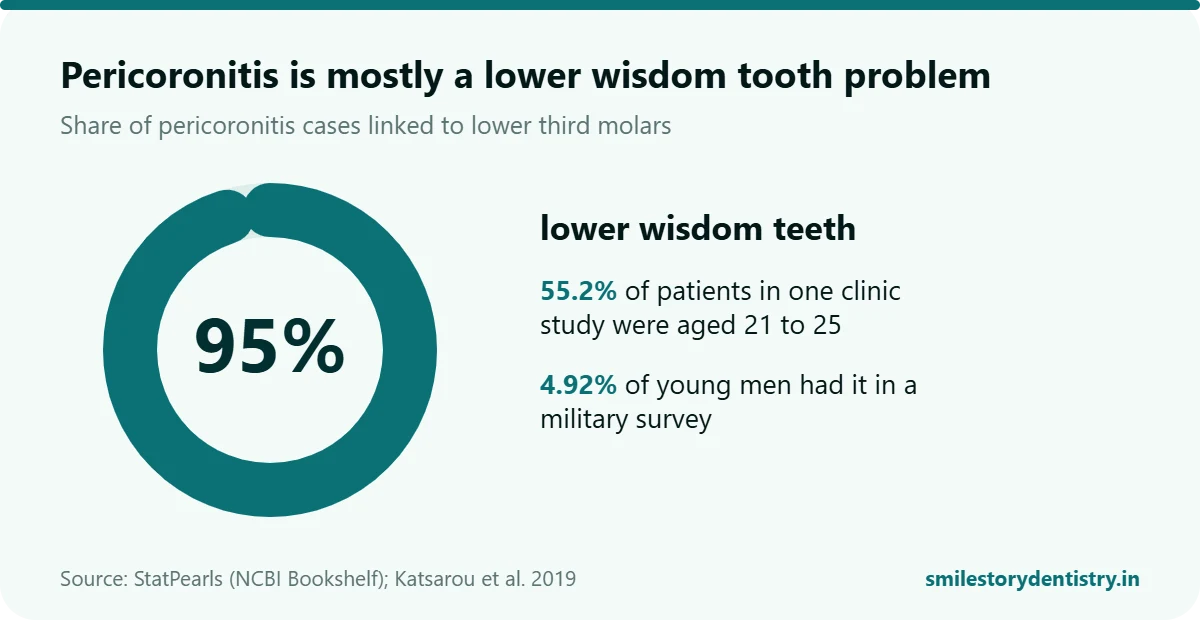
When a wisdom tooth only partly breaks through, a flap of gum (called an operculum) often stays over part of it. Food and bacteria collect underneath, where a toothbrush can't reach. The gum becomes inflamed and infected: that's pericoronitis.
It can also happen when the upper tooth bites down on the swollen flap, bruising it further and making it swell more, which is why it can escalate quickly.
Signs of pericoronitis
| Mild (acute, early) | Severe (spreading) |
|---|---|
| Sore, red gum behind the last molar | Swelling of the cheek or jaw |
| Pain when biting on the area | Difficulty opening the mouth (trismus) |
| Bad taste or bad breath | Difficulty swallowing |
| Small amount of pus from under the flap | Fever, swollen glands under the jaw |
| Ache spreading to the ear | Feeling generally unwell |
Anything in the right-hand column needs a dentist the same day. Swelling that spreads into the neck or affects breathing needs emergency hospital care.
What you can do at home for mild pericoronitis
- 1
Clean under the flap
Brush gently right at the back with a soft or small-headed brush. A water flosser or syringe of warm water can flush food out.
- 2
Warm salt-water rinses
Half a teaspoon of salt in a warm glass of water, swished several times a day, especially after meals.
- 3
Painkillers
Over-the-counter pain relief, taken as directed on the pack, can ease soreness.
- 4
Book a dental visit
Even if it settles, it tends to return until the cause is dealt with.
Don't self-prescribe antibiotics. They don't clear food trapped under the flap and aren't needed for mild cases. A dentist will decide if you need them.
How dentists treat pericoronitis
- Irrigation: flushing under the gum flap to remove debris and bacteria
- Easing the bite: smoothing or removing the upper tooth if it bites on the flap
- Antibiotics, only if there is spreading swelling or fever
- Removing the gum flap (operculectomy) in selected cases where the tooth is upright and has room
- Removing the wisdom tooth, the most reliable way to prevent repeat episodes
When removal makes sense
A single mild episode may settle and not return, especially if the tooth eventually comes through fully. But if the tooth is angled or stuck and can never erupt properly, the flap stays, and so does the risk. After two or more episodes, guidelines generally support removing the tooth. Read our wisdom tooth removal guide.
Exam season and pericoronitis
Pericoronitis tends to flare when you're run down. Studies have noted links with stress, upper respiratory infections and periods of poor sleep, which is why it so often strikes students and young professionals. If you've had it before, take extra care during stressful weeks:
- Flush the area after every meal, not just at night
- Keep up sleep and meals; fatigue lowers your defences
- Act at the first twinge rather than waiting for swelling
- Plan removal before exams, travel or a wedding, not during
Pericoronitis,
answered
Can't find your answer? We're one call away.
Call +91 76039 55135
Mild cases can settle with good cleaning and salt-water rinses within a few days, but the flap remains and the infection often returns. If the tooth can't fully erupt, removal is usually the lasting fix.
Mild gum soreness isn't. Swelling of the face, difficulty opening your mouth or swallowing, or fever needs same-day care, as the infection can spread.
Only a dentist or doctor should decide whether you need antibiotics and which one. They are reserved for spreading infection or fever, not for mild local soreness.
Usually the acute infection is calmed first, and the tooth is removed once the swelling has settled, which makes surgery easier and safer.
Yes. Bacteria and trapped food under the flap often cause a bad taste and bad breath, which improve once the area is cleaned or the tooth removed.
Research behind this guide
- StatPearls. Pericoronitis. NCBI Bookshelf
- Katsarou T et al. Pericoronitis: a clinical and epidemiological study in Greek military recruits. J Clin Exp Dent, 2019
- NICE. Guidance on the extraction of wisdom teeth (TA1)
- Moloney J, Stassen LF. Pericoronitis: treatment and a clinical dilemma. J Ir Dent Assoc, 2009
This guide is for general information and does not replace a dental examination. Every mouth is different, so book a consultation for advice on your own teeth.