Mouth care month by month
| Age | What to do |
|---|---|
| 0 to 6 months | Wipe gums with a clean, soft, damp cloth after feeds and before bed |
| First tooth (around 6 months) | Start brushing twice a day with a soft infant brush and a rice-grain smear of fluoride toothpaste |
| By 12 months | First dental visit; start moving from bottle to an open or straw cup |
| 12 to 24 months | Brush all surfaces twice daily; no bottle in bed; limit juice |
| 2 to 3 years | Continue a smear of toothpaste; begin flossing where teeth touch |
| 3 years onward | Pea-sized amount; you still do the brushing |
Night feeds, bottles and early decay
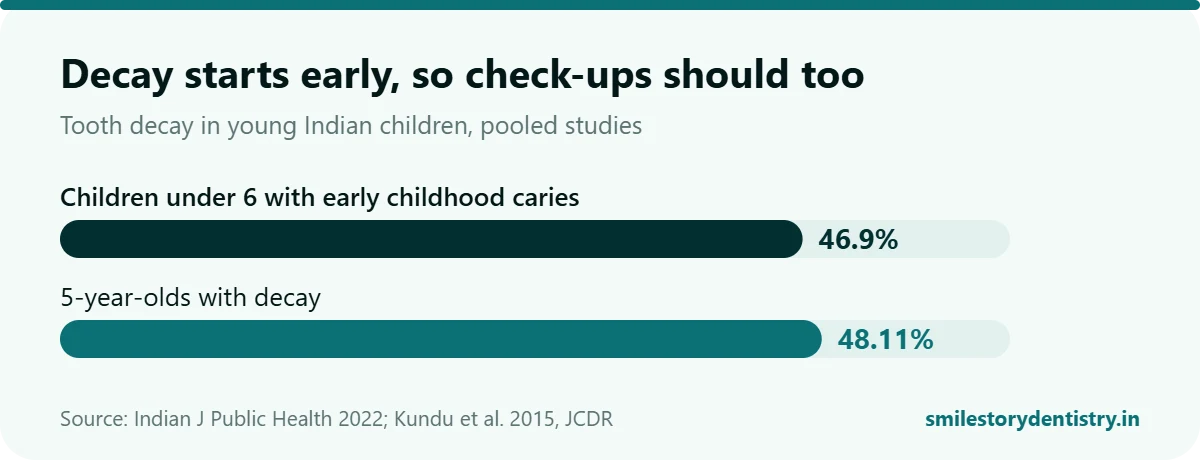
Milk, formula and juice left around teeth for hours, especially during sleep when saliva slows, are a leading cause of early childhood caries. It often starts as white lines along the gums of the upper front teeth.
- Don't put your baby to sleep with a bottle of milk, juice or sweetened liquid
- After a night feed, wipe the teeth gently with a damp cloth once teeth have arrived
- Offer plain water between feeds after 6 months
- Avoid dipping pacifiers in sugar, honey or jaggery
- Avoid sharing spoons or pre-chewing food, which can pass decay bacteria to your baby
Safe teething relief
| Try | Avoid |
|---|---|
| Rubbing gums gently with a clean finger | Teething gels with benzocaine for babies |
| A chilled (not frozen) teething ring | Amber or bead necklaces (choking and strangulation risk) |
| A cold, clean damp washcloth to chew | Rubbing gums with sugar, honey or alcohol |
| Paracetamol, only as advised by your doctor | Assuming fever or diarrhoea is just teething; see a doctor |
Your baby's first dental visit
Book it by the first birthday or within 6 months of the first tooth. It's quick and gentle, mainly advice for you. Read what happens at the first dental visit and how to prevent cavities in children.
Lift the lip: a 10-second monthly check
Early decay is easy to miss because it starts where you don't usually look. Once a month:
- 1
Lift the upper lip
Gently, while your baby lies on your lap facing you.
- 2
Look at the gumline
Check the upper front teeth right where they meet the gum.
- 3
Look for chalky white lines
Dull white bands that weren't there before are the earliest sign of decay.
- 4
Book if you see them
At this stage, fluoride varnish and feeding changes can often stop decay without any filling.
Baby teeth,
answered
Can't find your answer? We're one call away.
Call +91 76039 55135
As soon as the first tooth appears, usually around 6 months. Before that, wipe the gums with a clean, damp cloth.
Yes, in a rice-grain sized smear twice a day. This small amount protects teeth and is safe if a little is swallowed.
Breastfeeding is recommended and has many benefits. Once teeth arrive, frequent night feeds without cleaning can contribute to decay, so wipe or brush the teeth and avoid sugary foods.
Chalky white lines near the gums on the upper front teeth are the earliest sign, followed by brown spots or holes.
It's a good habit. Wiping gums after feeds keeps the mouth clean and gets your baby used to mouth care.
Research behind this guide
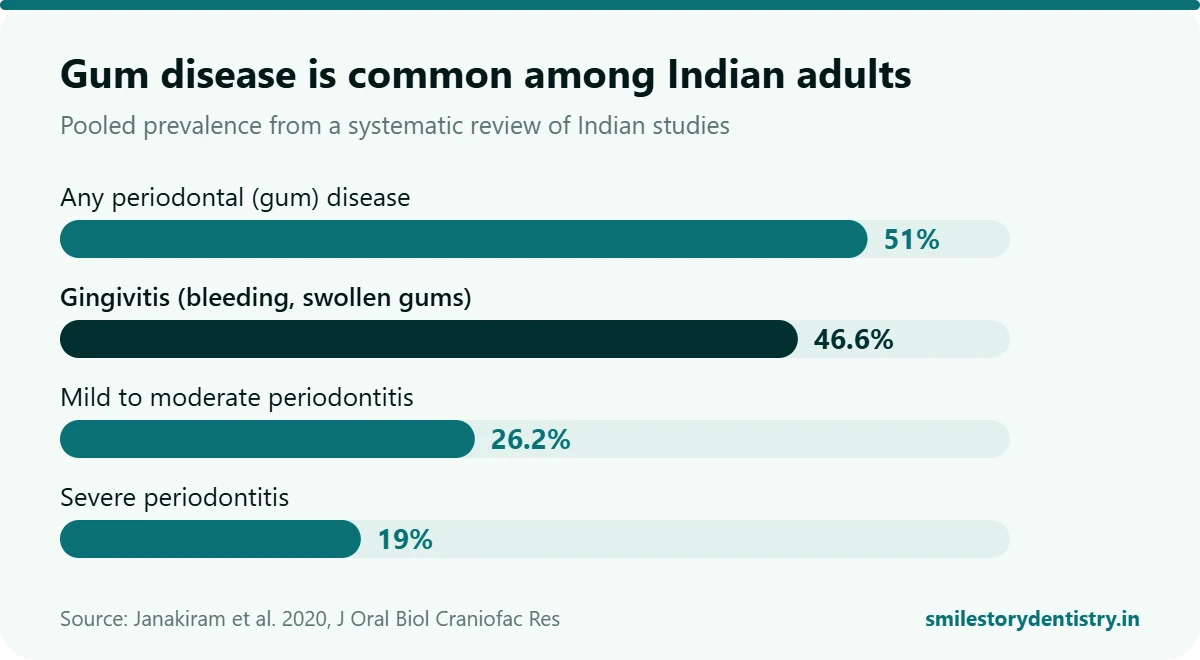
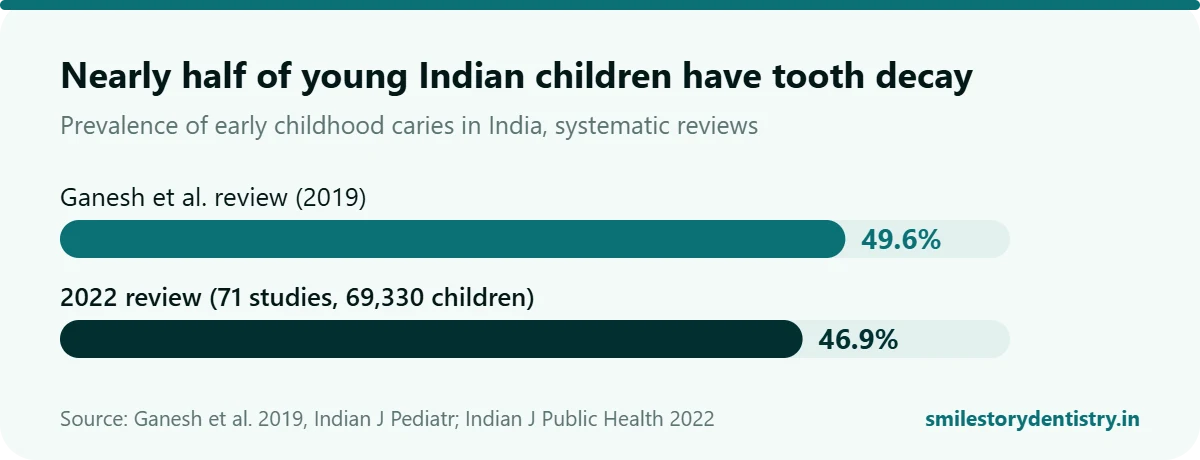
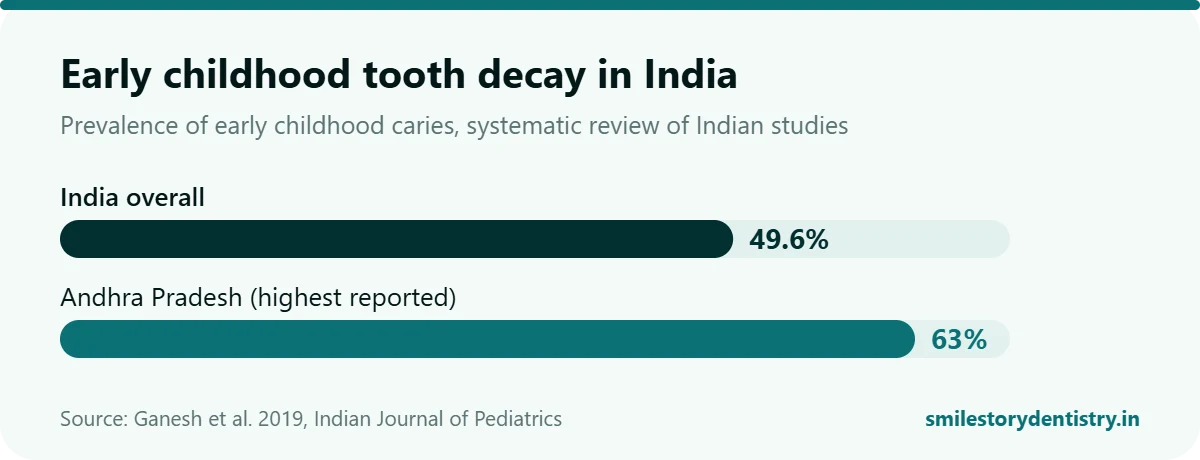
- Ganesh A et al. Prevalence of early childhood caries in India: a systematic review. Indian Journal of Pediatrics, 2019
- American Academy of Pediatric Dentistry. Parent FAQ
- Colgate India. How to care for baby gums and teeth
- Johns Hopkins Medicine. Care of the mouth and teeth
This guide is for general information and does not replace a dental examination. Every mouth is different, so book a consultation for advice on your own teeth.